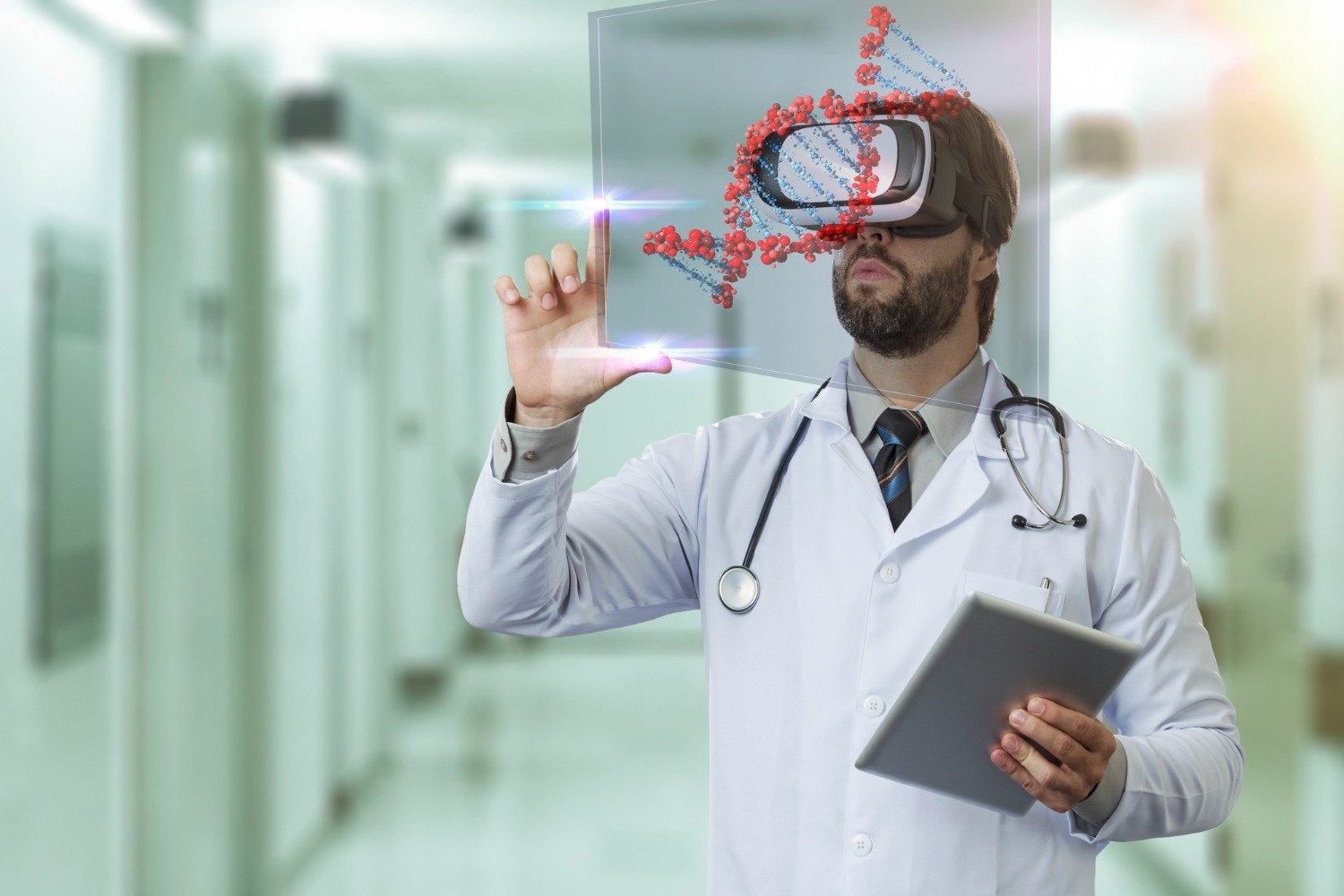
Artificial intelligence is changing the future of doctors by improving diagnosis, supporting treatment decisions, and reducing administrative workload, allowing doctors to focus more on patient care and clinical decision-making while remaining responsible for medical outcomes.
Artificial intelligence is beginning to change how healthcare is practiced, and this change is directly shaping the future role of doctors and healthcare professionals. Artificial intelligence is not replacing doctors, but changing how they diagnose, make decisions, and manage clinical workloads. Hospitals and clinical environments today generate large amounts of medical data through diagnostic tests, imaging, patient records, and monitoring systems. Managing and interpreting this information efficiently has become challenging using traditional methods alone. This transformation driven by artificial intelligence in healthcare is becoming central to how modern hospitals deliver safe and efficient care.
AI supports doctors by analyzing data faster, identifying patterns, and assisting clinical decision-making. Rather than replacing medical professionals, AI is changing how doctors work by reducing time spent on repetitive and data-heavy tasks while allowing greater focus on patient care, clinical judgment, and complex decision-making.
For life science students and future healthcare professionals, understanding this shift is becoming important. As healthcare becomes more data-driven, doctors will increasingly work alongside AI systems, making it essential to understand where artificial intelligence helps, where human expertise remains critical, and how medical roles are evolving in an AI-assisted healthcare system. For students exploring an AI in healthcare course, this understanding helps connect technology with real clinical responsibilities.
What Is Artificial Intelligence in Healthcare?
Artificial intelligence in healthcare refers to the use of computer systems that can analyze medical data, identify patterns, and support decision-making in clinical and operational settings. These systems are designed to assist healthcare professionals by processing large volumes of information more quickly and consistently than manual methods alone. Many professionals begin learning these applications through structured healthcare AI courses that explain how data becomes clinical insight.
In practice, artificial intelligence is commonly used to analyze medical images, organize electronic health records, identify risk patterns in patient data, and support treatment planning. AI systems do not make independent medical decisions. Instead, they function as clinical support tools that provide insights or recommendations which doctors review and interpret before making final decisions.
It is important to distinguish artificial intelligence from automation. Automation performs predefined tasks based on fixed rules, while AI systems learn from data and improve their performance over time. In healthcare, this ability allows AI to recognize subtle patterns across thousands of cases, helping doctors detect risks earlier and make more informed clinical judgments.
Artificial intelligence is therefore used to support clinical decision-making by improving data analysis and workflow efficiency while keeping medical responsibility with healthcare professionals.
How AI Is Improving Diagnosis and Clinical Accuracy
Artificial intelligence is improving medical diagnosis by helping doctors analyze complex clinical data more quickly and consistently. Modern diagnosis often requires reviewing imaging scans, laboratory results, patient history, and clinical observations within limited timeframes. As the volume of diagnostic information increases, maintaining accuracy while working under time pressure becomes more challenging using manual review alone.
One of the most visible applications of AI is medical imaging. For example, AI-assisted imaging systems are already used in some hospitals to flag potential strokes or early tumors within minutes, allowing doctors to prioritize urgent cases faster. AI systems trained on large datasets can analyze X-rays, CT scans, and MRI images to identify patterns associated with abnormalities such as tumors, fractures, or early disease markers. These systems do not replace radiologists or specialists but act as an additional layer of review, highlighting areas that may require closer attention. This reduces the likelihood of missed findings and helps doctors prioritize urgent cases more effectively.
AI is also contributing to earlier disease detection by identifying subtle changes that may not be immediately apparent during routine analysis. By recognizing patterns across large numbers of patient records and diagnostic outcomes, AI systems can assist in identifying risk indicators for conditions such as cardiovascular disease, respiratory disorders, or neurological decline at earlier stages. Earlier detection allows doctors to intervene sooner, which can significantly improve patient outcomes. These advancements show how AI and machine learning in healthcare are strengthening a doctor’s ability to detect disease sooner.
Despite these advances, AI functions as a decision-support tool rather than an independent diagnostic system. Doctors remain responsible for interpreting results, considering patient context, and confirming diagnoses. In practice, AI improves diagnostic speed and consistency while keeping clinical judgment and accountability firmly in human hands.
How AI Is Supporting Treatment Decisions and Personalized Medicine
Treatment decisions in modern healthcare require doctors to consider multiple factors, including clinical evidence, patient history, diagnostic results, and expected treatment outcomes. As medical knowledge expands and patient data becomes more detailed, evaluating all possible options manually can become complex and time-consuming. Artificial intelligence supports this process by organizing and analyzing large volumes of clinical information to identify patterns that may assist in selecting appropriate treatment strategies.
AI systems are increasingly used to compare patient data with outcomes from similar clinical cases, helping doctors understand which treatments have shown better results under comparable conditions. This allows treatment planning to move beyond standardized approaches toward more individualized care. Instead of applying the same treatment pathway to all patients with similar diagnoses, doctors can use AI-supported insights to tailor therapies based on patient-specific factors.
In areas such as oncology and chronic disease management, AI contributes to more precise treatment decisions by analyzing biomarkers, disease progression patterns, and response histories. AI-enabled monitoring systems can also track patient data over time and generate alerts when early signs of deterioration appear, allowing intervention before complications become severe. This shifts care from reactive treatment toward earlier and more preventive decision-making.
Artificial intelligence does not determine treatment independently. Doctors evaluate AI-generated insights alongside clinical judgment, patient preferences, and ethical considerations before making final decisions.
In practice, AI helps doctors move from reactive treatment toward more predictive and personalized care while keeping clinical responsibility human led. The expansion of artificial intelligence in healthcare is therefore enabling more precise and individualized therapies.
AI in Drug Discovery and Clinical Research
Artificial intelligence is also influencing healthcare beyond direct patient care by accelerating drug discovery and clinical research processes. Developing new medicines traditionally requires years of laboratory research, trial-and-error experimentation, and extensive clinical testing. The increasing volume of biological and clinical data has made it difficult to identify promising drug candidates efficiently using conventional methods alone.
AI systems help researchers analyze large datasets related to molecular structures, genetic information, and disease pathways to identify potential drug targets more quickly. By recognizing patterns across existing research and experimental data, AI can narrow down candidate compounds that are more likely to produce effective results. This reduces early-stage research time and allows scientific teams to focus resources on the most viable treatment options. Leading healthcare AI companies are investing heavily in these technologies to shorten research timelines.
In clinical research, artificial intelligence supports patient selection for trials, predicts potential outcomes, and helps analyze trial data more efficiently. This improves trial design and can reduce delays caused by unsuitable participant selection or inconclusive results. AI also assists in analyzing real-world clinical data after treatments are introduced, helping researchers understand long-term effectiveness and safety.
Despite these advancements, AI does not replace scientific validation or clinical testing. Drug safety, efficacy, and regulatory approval still depend on rigorous human-led research and evaluation. AI primarily functions as an analytical tool that improves efficiency in research workflows while keeping scientific oversight and responsibility within clinical and research teams.
How AI Is Reducing Administrative Burden and Physician Burnout
A significant portion of a doctor’s time is spent on documentation, record management, and administrative processes that are necessary for healthcare delivery but do not directly contribute to clinical decision-making. Maintaining electronic health records, generating reports, scheduling follow-ups, and handling billing-related documentation can reduce the time available for patient interaction and increase overall workload. Over time, this administrative pressure has become a major contributor to physician fatigue and burnout across healthcare systems.
Where doctors previously spent significant time documenting care manually, AI systems now assist by structuring information automatically, allowing more time for patient interaction.
Artificial intelligence is being used to streamline many of these routine processes. AI-assisted documentation tools can automatically structure clinical notes from consultations, organize patient information within electronic health records, and reduce repetitive manual data entry. This improves accuracy while minimizing the time doctors spend on documentation tasks. AI systems are also used to automate scheduling, workflow coordination, and data organization, helping healthcare teams manage operational processes more efficiently.
By reducing repetitive administrative work, AI allows doctors to spend more time on clinical reasoning, patient communication, and complex cases that require human judgment. These systems improve workflow efficiency by handling tasks that do not require medical expertise, allowing doctors to focus on patient care and decision-making. This is one of the clearest areas where ai in healthcare management is delivering immediate operational value.
Will Artificial Intelligence Replace Doctors or Change Their Role?
Artificial intelligence is unlikely to replace doctors, but it is changing their role from primary data processors to supervisors of AI-supported clinical decisions. Traditionally, a large portion of medical practice involved gathering information, reviewing reports, and manually connecting clinical findings before arriving at a diagnosis or treatment plan. With AI assisting in data analysis, doctors increasingly focus on evaluating insights, validating recommendations, and applying clinical judgment within the broader context of patient care.
This shift introduces a model often described as human-in-the-loop healthcare, where AI systems generate analytical outputs but doctors remain responsible for interpretation and final decisions. AI can identify patterns and provide recommendations based on data, but it does not understand patient emotions, social circumstances, or ethical considerations that influence real-world medical decisions. Doctors continue to integrate these human factors when determining appropriate care.
The evolving role also requires greater familiarity with how AI tools function, including understanding their capabilities and limitations. Doctors are not expected to become programmers, but they must be able to question AI outputs, recognize potential errors, and ensure that technology is applied responsibly. As routine analytical tasks become automated, the value of skills such as communication, empathy, complex reasoning, and ethical judgment becomes more central to medical practice. Training programs such as an artificial intelligence healthcare course help clinicians build confidence in using these systems.
In this environment, artificial intelligence changes how doctors work rather than diminishing their importance. The physician’s role moves toward guiding decisions, managing uncertainty, and maintaining accountability for patient outcomes while using intelligent systems as analytical support.
Limitations and Risks of Artificial Intelligence in Healthcare
While artificial intelligence offers clear advantages in efficiency and data analysis, its use in healthcare also introduces important limitations that must be understood. AI systems rely heavily on the quality and diversity of the data used to train them. If training datasets do not represent different populations adequately, AI models may produce less accurate results for certain groups, potentially reinforcing existing healthcare disparities rather than reducing them. Even the most advanced solutions developed by ai in healthcare companies depend on high-quality representative data.
Another challenge is the lack of transparency in some AI systems, often referred to as the “black box” problem. For this reason, AI recommendations in healthcare are designed to support, not override, clinical judgment. Many advanced AI models generate results without clearly explaining how a conclusion was reached. In clinical settings, this can make it difficult for doctors to fully trust or justify AI-generated recommendations, especially when medical decisions require clear reasoning and accountability.
There is also the risk of over-reliance on automated systems. AI can assist in identifying patterns and highlighting risks, but it cannot replace clinical judgment, patient context, or ethical decision-making. Blindly accepting AI outputs without verification can lead to errors, particularly in complex cases where medical decisions depend on factors beyond data alone.
Legal and ethical responsibility remains another important consideration. When AI tools are used in diagnosis or treatment planning, accountability still rests with healthcare professionals and institutions rather than the technology itself. For this reason, AI systems are increasingly designed to function as support tools that require human oversight.
In practice, artificial intelligence improves healthcare when used as an assistive technology rather than an autonomous decision-maker. Responsible implementation requires continuous validation, transparency, and careful integration into clinical workflows to ensure that patient safety and medical accountability remain central.
Where Artificial Intelligence Works Best Today and Where It Still Struggles
Artificial intelligence is already showing strong results in specific areas of healthcare where large volumes of structured data are available and patterns can be measured consistently. Tasks that involve image analysis, data organization, and repetitive workflows are particularly well suited for AI support because outcomes can be trained and validated against large datasets.
In areas such as radiology and pathology, AI systems assist in analyzing medical images and highlighting abnormalities that require further review. Administrative workflows, including documentation support and record organization, also benefit from automation because these processes follow predictable patterns. Chronic disease monitoring is another area where AI performs effectively, as continuous patient data allows systems to detect early warning signs and generate alerts before conditions worsen.
However, artificial intelligence continues to face limitations in situations that require contextual understanding or complex human judgment. Patients often present with multiple conditions, incomplete medical histories, or social and psychological factors that influence treatment decisions. AI systems struggle to interpret these nuances because they rely primarily on structured data rather than lived experience or ethical reasoning.
Medical decision-making also involves communication, empathy, and negotiation between doctors and patients, especially when discussing risks, uncertainty, or end-of-life care. These aspects of healthcare remain fundamentally human responsibilities that cannot be automated. As a result, AI currently performs best as an analytical assistant in well-defined tasks, while doctors remain essential in managing complexity, uncertainty, and individualized patient care.
The Future of Doctors in an AI-Assisted Healthcare System
Artificial intelligence is expected to become a routine part of healthcare delivery rather than a separate or specialized technology. Similar to how electronic health records became standard over the past decade, AI tools are expected to integrate gradually into everyday clinical workflows rather than replacing existing systems entirely. As AI tools become integrated into diagnostic systems, hospital workflows, and clinical decision support platforms, doctors will increasingly interact with AI outputs as part of everyday medical practice. The focus will shift from whether AI should be used to how it can be used responsibly and effectively within clinical environments. As artificial intelligence in healthcare becomes routine, digital literacy will become a core professional expectation.
One of the major changes expected in the coming years is the expansion of predictive and preventive healthcare. AI systems capable of analyzing long-term patient data may help identify health risks earlier, allowing doctors to intervene before diseases progress to advanced stages. Remote monitoring technologies and AI-assisted analysis may also improve healthcare access in underserved or resource-limited regions by supporting early detection and follow-up care.
The future healthcare environment will likely involve closer collaboration between doctors, data scientists, and technology teams to ensure that AI systems are developed and implemented safely. Doctors will continue to lead clinical decisions, while AI supports information analysis and workflow efficiency. Rather than reducing the importance of medical professionals, AI is expected to increase the need for clinicians who can interpret data responsibly, manage uncertainty, and apply human judgment in complex situations.
In this evolving system, the defining role of doctors remains unchanged at its core. Medicine continues to rely on accountability, ethical reasoning, and patient trust, while artificial intelligence functions as a tool that strengthens clinical capability rather than replacing it.
Conclusion
Artificial intelligence is changing healthcare by helping doctors manage growing clinical complexity while ensuring that medical decision-making remains human-led. From improving diagnostic accuracy and supporting treatment decisions to reducing administrative workload, AI allows doctors to focus more on clinical judgment, patient interaction, and complex decision-making where human expertise remains essential. The responsibility for diagnosis, treatment, and patient outcomes continues to rest with medical professionals, with AI functioning as an analytical support system within clinical workflows.
Programs like artificial intelligence and machine learning in healthcare offered by Novelty Skills Training Dubai aim to bridge this gap by helping learners understand how AI tools are applied in real clinical settings. Developing this awareness allows healthcare professionals to use technology responsibly while ensuring that medical decision-making continues to be guided by human judgment, experience, and accountability. Learners entering ai for medicine fields must understand both the power and the responsibility of using intelligent systems.
The future of medicine is not defined by machines replacing doctors, but by collaboration where intelligent systems enhance efficiency and insight, and doctors continue to lead care through reasoning, empathy, and responsibility.
Frequently Asked Questions (FAQs)
1. What types of artificial intelligence are commonly used in healthcare today?
Healthcare commonly uses machine learning for pattern recognition, natural language processing for analyzing clinical notes, and computer vision for interpreting medical images. These technologies help analyze medical data and support clinical decision-making rather than performing independent medical actions.
2. Which medical specialties are currently using AI the most?
AI adoption is highest in specialties that rely heavily on data and imaging, such as radiology, pathology, cardiology, oncology, and dermatology. Administrative and operational areas of healthcare also use AI to improve workflow efficiency and reduce documentation workload.
3. How accurate is AI compared to doctors in medical diagnosis?
AI can achieve high accuracy in specific tasks such as detecting abnormalities in medical images. However, real-world diagnosis requires interpretation of symptoms, patient history, and clinical context. For this reason, AI is used as a support tool, while doctors remain responsible for confirming diagnoses and treatment decisions.
4. Can AI help reduce medical errors in hospitals?
AI can help reduce certain types of errors by flagging abnormal test results, identifying potential drug interactions, or highlighting findings that may require further review. However, AI systems also require human validation, as medical decisions must consider patient-specific factors beyond data patterns.
5. Can AI help improve healthcare access in rural or underserved areas?
AI-assisted diagnostic tools and remote monitoring systems can help healthcare providers detect risks earlier and prioritize patients who require urgent care. This supports doctors working in areas with limited specialist availability but does not replace clinical evaluation or treatment.
6. Is artificial intelligence already being used in hospitals in Dubai and the UAE?
Yes. Hospitals and healthcare providers in Dubai and across the UAE are increasingly adopting AI for medical imaging analysis, clinical decision support, patient monitoring, and administrative workflow management. National digital health initiatives have accelerated the integration of AI into both public and private healthcare systems.
7. How is AI regulated in healthcare in the UAE?
Healthcare AI applications in the UAE operate under regulatory oversight from authorities such as the Dubai Health Authority (DHA) and the Ministry of Health and Prevention (MOHAP). AI tools used in clinical settings must meet safety, clinical validation, and data protection requirements before being implemented in patient care.
8. How is patient data protected when AI systems are used in UAE healthcare?
Healthcare providers in the UAE follow strict data protection and cybersecurity regulations to safeguard patient information. AI systems used in clinical environments must comply with national health data laws and institutional privacy policies to ensure that patient data is securely stored and accessed only for authorized medical purposes.
9. How does AI support healthcare access in remote or underserved areas of the UAE?
AI-assisted diagnostics and remote monitoring technologies help healthcare providers identify patient risks earlier and manage follow-up care more efficiently. This enables better coordination between primary care providers and specialists, improving healthcare delivery beyond major urban centers.
10. Does learning AI improve career opportunities for healthcare professionals in Dubai?
Healthcare institutions in Dubai are actively investing in digital health technologies and data-driven care models. Professionals who understand how AI supports clinical workflows and healthcare analytics are increasingly valued, particularly in technologically advanced hospitals and research-focused healthcare environments.