
Data protection in UAE refers to the laws, frameworks, and security practices that protect personal information from unauthorized access, misuse, and breaches. The UAE PDPL regulates how organizations collect, process, and manage personal data while ensuring privacy, confidentiality, and responsible data handling.
In today’s digital economy, personal data has become a valuable asset for organizations across industries. From healthcare and finance to e-commerce and smart services, businesses in the data protection in UAE increasingly collect and process personal information to deliver services, enhance operations, and implement emerging technologies. As digital transformation accelerates, cybersecurity challenges are also increasing, with the region witnessing a 250% rise in ransomware attacks in recent years, highlighting the need for stronger data protection and security practices.
To establish a secure digital environment, the UAE introduced Federal Decree-Law No. 45 of 2021 Regarding the Protection of Personal Data law (UAE PDPL), which came into effect in January 2022. Overseen by the UAE Data Office, the law provides a comprehensive framework for responsible data collection, processing, storage, and sharing while protecting individual privacy rights.
Aligned with global privacy standards, including principles similar to the European Union’s GDPR, the UAE PDPL focuses on transparency, accountability, secure data handling, and responsible technology adoption. This guide explores UAE data protection law, compliance requirements, cybersecurity measures, and emerging trends shaping the future of data governance in the UAE.
What is UAE Personal Data Protection Law (PDPL)?
The UAE Personal Data Protection uae, introduced under Federal Decree-Law No. 45 of 2021 Regarding the Protection of Personal Data, is a comprehensive legal framework that regulates how organizations collect, process, store, use, and share personal information. The law establishes rules for responsible data handling while protecting individuals’ privacy rights in an increasingly digital environment.
The UAE PDPL applies to organizations that process personal data through electronic systems and defines the responsibilities of businesses when managing personal information. It ensures that personal data is handled lawfully, securely, and transparently throughout its lifecycle from collection and processing to storage, sharing, and deletion.
Key Pillars of UAE PDPL:
- Privacy and Data Protection:
Ensures individuals’ personal information is safeguarded against unauthorized access, misuse, loss, or unlawful processing.
- Lawful and Transparent Processing:
Requires organizations to process personal data for legitimate purposes while maintaining transparency and following applicable consent requirements.
- Individual Rights and Control:
Provides individuals with greater control over their personal information, including rights related to accessing, correcting, and managing their data.
- Security and Confidentiality:
Requires organizations to implement appropriate technical and organizational measures to protect personal data from unauthorized access, breaches, or loss.
- Accountability and Governance:
Places responsibility on organizations to establish effective data protection practices and maintain compliance with regulatory requirements.
- Cross-Border Data Protection:
Establishes requirements for transferring personal data outside the UAE while ensuring appropriate safeguards are maintained.
Key Data Privacy Compliance Requirements for Businesses
For businesses in the UAE, data privacy compliance means managing personal information responsibly while ensuring its protection, security, and confidentiality. Under the UAE data protection law
Organizations must follow practices that safeguard data and respect individual privacy rights.
Key areas businesses should focus on include:
1. Understand the Data You Collect: Organizations should identify the types of personal data they collect, the purpose of collection, how the information is processed, and where it is stored.
2. Maintain Transparent Data Practices: Businesses should clearly explain how personal information is collected, used, and shared, while ensuring that only relevant and necessary data is processed.
3. Manage Consent Responsibly: Organizations should obtain appropriate consent before processing personal data where required and ensure individuals understand how their information will be used.
4. Strengthen Data Security Measures: Businesses should implement suitable security controls to protect personal information from unauthorized access, misuse, loss, or accidental exposure.
5. Develop Privacy Policies and Processes: Clear policies and procedures help organizations define data handling responsibilities, guide employees, and maintain consistent privacy practices.
6. Ensure Third-Party Data Protection: When working with external vendors or service providers, businesses should ensure that personal data is handled securely and in line with privacy requirements.
7. Be Prepared for Data Incidents: Organizations should establish response procedures to identify, manage, and address potential data breaches or security incidents effectively.
By following these practices, businesses can build a stronger data protection framework, improve compliance readiness, and create greater trust among customers, employees, and partners.
Best Practices for Data Protection in UAE Organizations
Strong data protection requires organizations to build a proactive approach to managing and securing personal information. In the UAE, businesses can enhance privacy practices by implementing effective processes that protect data throughout its lifecycle.
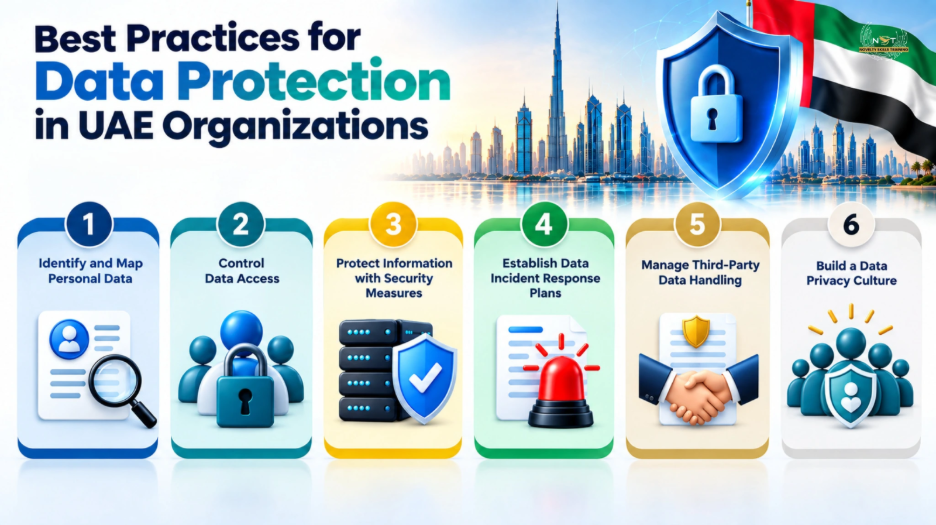
| Best Practice | What Organizations Should Do |
| Identify and Map Personal Data | Create a data inventory to understand what personal information is collected, where it is stored, how it is processed, and who can access it. |
| Control Data Access | Implement role-based access controls, multi-factor authentication, and regular access reviews to ensure only authorized users can access sensitive information |
| Apply Security Measures | Use safeguards such as encryption, secure storage, monitoring systems, and security controls to protect personal data from unauthorized access or misuse |
| Prepare Incident Response Plans | Develop clear procedures to identify, manage, report, and recover from potential data breaches while reducing operational impact. |
| Manage Third-Party Data Handling | Assess vendors, partners, and service providers that process personal data to ensure they follow appropriate privacy and security practices. |
| Build a Data Privacy Culture | Conduct regular employee training and awareness programs to help teams understand their responsibilities in protecting personal information. |
By adopting these best practices, UAE organizations can strengthen their data protection strategies, improve privacy compliance, and build lasting trust in the digital ecosystem
Role of Cybersecurity in Personal Data Protection UAE
Cybersecurity helps protect personal information by preventing unauthorized access, reducing cyber risks, and maintaining data confidentiality. In the UAE, strong cybersecurity practices support compliance with Federal Decree-Law No. 45 of 2021 Regarding the Protection of data privacy UAE
and strengthen overall data protection.
| Cybersecurity Role | How It Protects Personal Data |
| Access Control & Authentication | Ensures only authorized users can access personal data through secure verification and controlled permissions. |
| Data Encryption | Protects sensitive information by securing data and reducing the risk of unauthorized access or misuse. |
| Threat Detection & Monitoring | Helps organizations identify suspicious activities and potential security risks through continuous monitoring. |
| Network Security | Protects digital systems and personal data from external threats through security controls and protective measures. |
| Data Backup & Recovery | Helps restore important information and maintain business continuity after security incidents or data loss. |
| Security Awareness Training | Helps employees understand data privacy responsibilities and follow secure data handling practices. |
| Incident Response Management | Enables organizations to identify, manage, and recover from data breaches and cybersecurity incidents. |
Future of Data Protection in UAE
The data protection in UAE’s regulation uae landscape is continuing to evolve with the growth of digital services, artificial intelligence, and data-driven innovation. As organizations increasingly rely on personal information to deliver services and improve operations, protecting data through responsible practices, strong governance, and effective security measures will become a key priority.
The Future of Data Protection in UAE Will Be Shaped By:
1. Responsible Adoption of AI and Emerging Technologies
Organizations will need to ensure that AI and emerging technologies are adopted securely, transparently, and responsibly while aligning with the UAE’s evolving AI regulatory landscape and governance framework.
Government Recommendations:
- Conduct Privacy Impact Assessments (PIAs) before implementing AI-driven systems.
- Maintain human oversight for high-impact automated decisions.
- Ensure AI transparency and evaluate third-party technology providers for privacy risks.
2. Stronger Data Governance
Businesses will focus on strengthening how personal data is collected, managed, stored, and shared while maintaining accountability through effective data privacy and responsible AI governance frameworks.
Government Recommendations:
- Establish data classification and lifecycle management frameworks.
- Improve consent management and support individual data rights.
- Define clear accountability through Data Protection Officers (DPOs) and governance teams.
3. Advanced Cybersecurity Practices
Organizations will continue enhancing security measures to protect personal data from evolving cyber threats.
Government Recommendations:
- Align security practices with frameworks such as UAE Information Assurance Standards, ISO 27001, and NIST.
- Strengthen protection through encryption, access controls, and continuous monitoring.
- Maintain incident response plans and conduct regular security assessments.
4. Continuous Privacy Management
Data protection will evolve beyond compliance, requiring ongoing monitoring, improvement, and adaptation.
Government Recommendations:
- Integrate Privacy-by-Design principles into systems and services.
- Regularly review privacy policies and third-party data handling practices.
- Conduct periodic assessments to maintain long-term compliance.
By prioritizing privacy, security, and responsible data management, UAE organizations can confidently embrace digital transformation while building greater trust in the digital ecosystem.
Conclusion
As the UAE embraces rapid digital transformation, protecting personal data has become essential for creating a secure and trusted digital ecosystem. By following PDPL guidelines, strengthening cybersecurity practices, and adopting responsible data management strategies, organizations can protect sensitive information and build greater confidence among users and stakeholders.Novelty Skill Training (NST Dubai) supports professionals in developing practical cybersecurity and data protection skills through industry-focused training, preparing them to meet the growing demands of the UAE’s evolving digital security landscape.
Frequently Asked Questions
What is data privacy UAE?
Data privacy UAE refers to the practices and regulations that protect personal information and ensure responsible data handling by organizations.
What are the key data protection regulations UAE businesses should follow?
Businesses must follow regulations that ensure secure data collection, processing, storage, and sharing while protecting individual privacy.
Why is information privacy important for organizations?
Information privacy helps organizations protect sensitive data, reduce security risks, and build trust with customers and stakeholders.
What is a cross-border data transfer?
A cross-border data transfer occurs when personal data is shared or processed outside the UAE while following applicable privacy requirements.
What is the role of a data processor?
A data processor handles personal data on behalf of an organization and must ensure secure and responsible data processing.
Why is consent important in data processing?
Consent ensures individuals understand and agree to how their personal information is collected and used.
How can businesses improve privacy compliance?
Businesses can improve compliance by implementing strong security measures, clear privacy policies, and responsible data management practices.