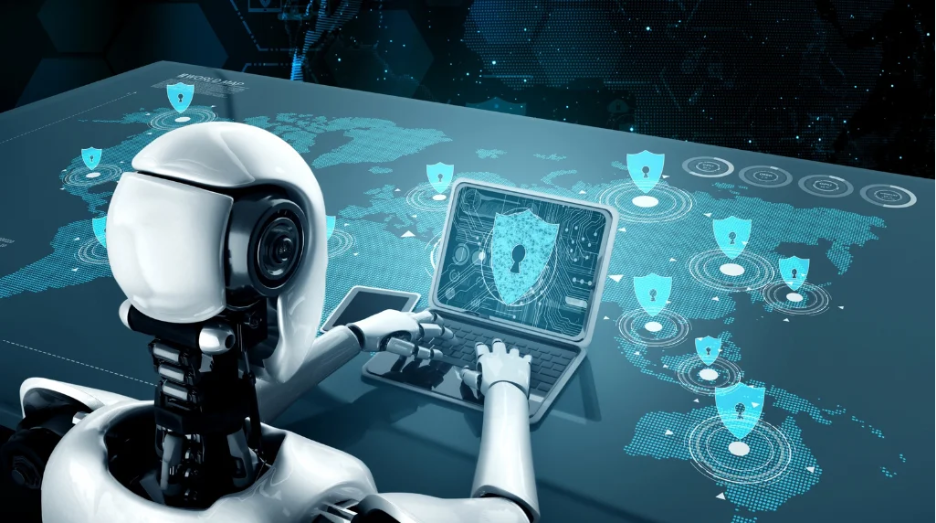
AI cybersecurity uses artificial intelligence, machine learning, and automation to detect threats, analyze risks, and strengthen digital security. In the UAE, AI-powered cybersecurity solutions are enabling organizations to protect critical infrastructure, secure sensitive information, and develop proactive defenses against evolving cyber threats in an increasingly connected digital environment.
As the UAE continues to accelerate its digital transformation, AI cybersecurity is becoming increasingly important as organizations adopt artificial intelligence, cloud technologies, smart infrastructure, and connected digital solutions. This expansion is increasing the need for advanced cybersecurity capabilities to protect critical systems, sensitive information, and connected environments from increasingly complex threats.
The growing adoption of AI-driven security solutions is reflected in the UAE’s expanding cybersecurity market. According to Grand View Research, the UAE AI in cybersecurity market is expected to reach USD 8,226.2 million by 2033, growing at a CAGR of 23.5% from 2026 to 2033. This projected growth signals increasing investment in AI-driven security technologies across the UAE.
This growing role of AI in cybersecurity raises important questions about how these technologies are being applied, where they deliver the most value, and what organizations need to consider when implementing them. This article explores how AI cybersecurity is transforming digital security in the UAE, covering its key applications, benefits, challenges, and future opportunities.
What is AI in Cybersecurity?
AI cybersecurity refers to the use of artificial intelligence technologies such as machine learning, data analytics, and automation to identify, analyze, and respond to cyber risks. Unlike traditional security systems that depend mainly on predefined rules, AI-powered solutions can learn from data, recognize abnormal patterns, and adapt to evolving threats.
The UAE’s commitment to AI adoption provides an important policy context for this development. The UAE Strategy for Artificial Intelligence 2031 focuses on expanding AI adoption across sectors and strengthening the country’s digital innovation ecosystem. This broader national focus creates an environment in which organizations are increasingly considering how AI can be integrated into areas such as cybersecurity, risk management, and digital operations.
How AI Works in Cybersecurity
AI-powered cybersecurity systems work by analyzing large volumes of digital data and identifying patterns that may indicate potential security risks.
- Data Analysis:
AI systems process information from sources such as networks, applications, devices, and security logs to detect unusual activities and security concerns.
- Machine Learning:
Machine learning models learn from historical security data and threat patterns, helping identify suspicious behavior and potential risks beyond known attack methods.
- Automation:
AI helps streamline cybersecurity operations by analyzing alerts, prioritizing risks, and supporting faster responses to security incidents.
Role of AI Security in UAE’s Digital Transformation
The UAE’s shift toward an AI-driven digital economy is increasing the need for stronger cybersecurity. AI security helps organizations protect digital systems, secure sensitive data, and support the safe adoption of emerging technologies.
The UAE Strategy for Artificial Intelligence 2031 supports the expansion of AI across sectors. As AI becomes increasingly integrated into business and government operations, cybersecurity is essential for secure data management, reliable digital services, and responsible technology adoption.
Key AI Security Applications
According to Khalifa University, AI can strengthen cybersecurity through intelligent threat detection, automated analysis, and faster response.
1. Threat Detection & Intrusion Monitoring
AI analyzes network and security data to identify abnormal activity, suspicious traffic, unauthorized access, and potential breaches.
UAE use case: The UAE Cyber Security Council, Core42, and Microsoft are working to deploy MDASH, an AI-powered cybersecurity capability, across UAE government entities to support vulnerability detection, risk prioritization, and faster cyber response.
2. Malware & Ransomware Detection
AI analyzes file and system behavior to identify malware, ransomware, and emerging threats.
UAE use case: Khalifa University research includes AI-based ransomware detection and malware classification, demonstrating how AI can help detect evolving malicious software.
3. User Behavior Analysis
AI analyzes user and system activity to identify unusual behavior, compromised accounts, and potential security risks.
UAE use case: Khalifa University researchers have explored deep-learning approaches for detecting insider threats, particularly in security-sensitive and critical infrastructure environments.
4. Automated Incident Response
AI can analyze security alerts, prioritize threats, and support faster responses to cyber incidents.
UAE use case: The Agentic AI for Government Services Accelerator brings together 33 Dubai Government entities to develop agentic AI solutions for complex, multi-step government workflows.
5. Predictive Threat Intelligence
AI analyzes historical data and threat patterns to identify potential risks and support proactive security measures.
UAE use case: Khalifa University’s Center for Cyber-Physical Systems combines AI, data analytics, and cybersecurity research to strengthen the resilience of connected environments across areas such as transportation, energy, and 5G.
Protecting Emerging AI Systems
As AI adoption grows, organizations also need to secure AI models, data, APIs, and digital workflows against risks such as unauthorized access, data exposure, and system manipulation.
Strengthening Digital Resilience Across UAE Sectors
AI-powered cybersecurity can support protection and risk management across key sectors:
- Banking & Financial Services: Fraud detection, customer-data protection, and secure digital transactions.
- Healthcare: Protection of patient information and digital healthcare platforms.
- Government Services: Monitoring and protection of digital government platforms.
- Smart Infrastructure: Protection of connected systems and critical infrastructure from cyber risks.
By combining AI with cybersecurity, UAE organizations can improve threat visibility, strengthen security operations, and build a more resilient digital ecosystem while continuing to adopt emerging technologies.
AI Threat Detection and AI Cyber Security Tools
As cyber threats continue to evolve, UAE organizations are adopting AI-powered cybersecurity solutions to improve threat detection, automate security processes, and strengthen digital resilience. AI threat detection uses machine learning, behavioral analysis, and threat intelligence to identify suspicious activities and support faster responses.
AI Threat Detection
AI-based threat detection analyzes security data from networks, applications, and devices to identify unusual patterns and potential risks. Unlike traditional methods that rely mainly on known threats, AI can detect emerging risks through behavior analysis.
Key capabilities include:
- Real-time Monitoring: Identifies suspicious activities across digital environments.
- Behavior Analysis: Detects unusual access patterns and abnormal system activity.
- Predictive Detection: Uses threat data to identify potential risks early.
- Automated Response: Helps security teams prioritize and manage incidents faster.
AI Cyber Security Tools in UAE
The UAE Cyber Security Council has supported the adoption of AI-driven cybersecurity solutions to enhance cyber resilience. Some key platforms include:
- Open Innovation AI Cybersecurity Model: Supports vulnerability analysis, secure code assessment, and automated security improvements.
- TENEX.ai Cyber Security Platform: Uses AI agents for threat analysis, SOC automation, and faster incident response.
- Group-IB Threat Intelligence: Applies AI and machine learning for threat monitoring, intelligence analysis, and early risk detection.
- Cyble Vision Threat Intelligence: Identifies digital risks, leaked credentials, and potential cyber threats through AI-based monitoring.
- Core42 AI Security Solutions: Provides secure cloud infrastructure with AI-driven protection for sensitive workloads.
- Subnetik AI Security Stack: Helps organizations secure AI environments by managing risks such as data exposure and AI model vulnerabilities.
Benefits and Challenges of AI-Powered Cybersecurity
Benefits:
- Faster Threat Detection: AI helps security teams identify and respond to cyber threats quickly by analyzing large amounts of data in real time.
- 24/7 Protection: AI continuously monitors networks, systems, and user activities to detect unusual behavior.
- Proactive Threat Prevention: AI can predict potential risks by analyzing patterns and identifying early warning signs.
- Automated Security Tasks: It reduces manual effort by automating threat analysis, alerts, and response actions.
- Better Scalability: AI solutions help organizations protect growing digital environments, including cloud platforms and connected devices.
Challenges:
- AI-Driven Cyber Attacks: Attackers can also use AI to develop smarter phishing campaigns, malware, and hacking techniques.
- Data Privacy Concerns: AI systems need access to large amounts of data, making secure data handling a key challenge.
- Accuracy Challenges: AI may sometimes generate false alerts or fail to recognize completely new attack methods.
- Evolving Threat Landscape: Security teams must continuously update AI systems to stay ahead of changing cyber threats.
- Need for Skilled Experts: Organizations require professionals who understand both cybersecurity and AI technologies.
Future of AI in Cybersecurity in UAE
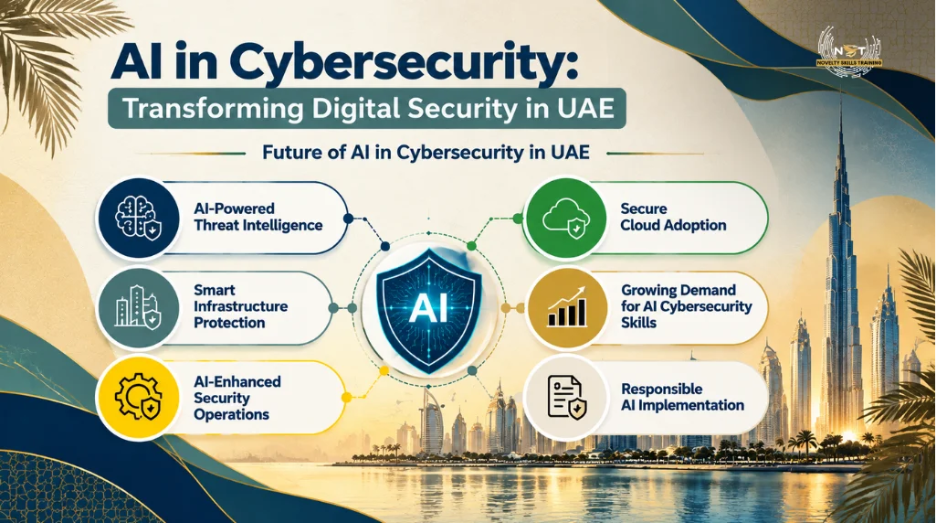
The UAE is rapidly advancing its digital transformation across sectors such as government, banking, healthcare, and smart infrastructure. With the rise of sophisticated cyber threats, AI is expected to become a key technology for improving threat detection, automating security processes, and strengthening overall cyber resilience.
Key Trends Shaping the Future:
- AI-Powered Threat Intelligence: AI threat intelligence will help UAE organizations analyze security data, identify unusual activities, and detect potential cyber threats faster.
- Smart Infrastructure Protection: As smart cities, IoT systems, and connected services expand, AI-driven cybersecurity solutions will help protect critical infrastructure and digital assets.
- AI-Enhanced Security Operations: AI will support SOC teams by automating threat monitoring, prioritizing security alerts, and improving incident response.
- Secure Cloud Adoption: With increasing cloud security adoption across industries, AI will help organizations monitor cloud environments and identify security risks in real time.
- Growing Demand for Artificial Intelligence Cybersecurity Skills: The adoption of AI-driven security solutions will increase the need for professionals with expertise in cybersecurity, AI technologies, threat analysis, and security automation.
- Responsible AI Implementation: Organizations will focus on secure AI adoption by addressing challenges related to data privacy, AI governance, and system reliability.
Conclusion
As the UAE accelerates its digital transformation across industries, cybersecurity is becoming a critical priority for protecting digital services, sensitive data, and connected infrastructure. The integration of AI into cybersecurity is helping organizations move toward smarter, faster, and more proactive security approaches while creating new opportunities for professionals with the right technical expertise.
To succeed in this evolving landscape, professionals need practical knowledge of both cybersecurity fundamentals and emerging AI-driven technologies. Novelty Skill Training helps bridge this industry skill gap through career-focused cybersecurity programs designed to equip learners with relevant skills and prepare them for future opportunities in AI-powered cybersecurity.
Frequently Asked Questions
1. What is AI cybersecurity and how does it work?
AI cybersecurity uses artificial intelligence, machine learning, and automation to detect, analyze, and respond to cyber threats. It helps organizations identify risks and improve security responses by analyzing large volumes of data.
2. How is AI used in cybersecurity?
AI in cybersecurity is used for threat detection, malware analysis, intrusion monitoring, user behavior analysis, and automated incident response to help organizations identify and manage risks faster.
3. What are the benefits of artificial intelligence cybersecurity?
Artificial intelligence cybersecurity helps improve threat detection, automate security operations, enable continuous monitoring, and support faster responses to cyber incidents.
4. What are AI cyber security tools used for?
AI cyber security tools help analyze security data, detect suspicious activities, automate responses, and improve threat intelligence for better cyber protection.
5. How does AI threat detection improve cybersecurity?
AI threat detection identifies abnormal patterns and potential risks by analyzing network, application, and device data. It helps detect emerging threats through behavior analysis and predictive insights.
6. Why is AI security important in the UAE?
AI security UAE solutions help organizations protect sensitive data, secure digital infrastructure, and strengthen cyber resilience as cloud technologies and smart systems continue to expand.
7. What is the future of AI in cybersecurity?
The future of AI in cybersecurity includes advanced threat intelligence, automated security operations, cloud protection, and growing demand for professionals skilled in AI and cybersecurity.