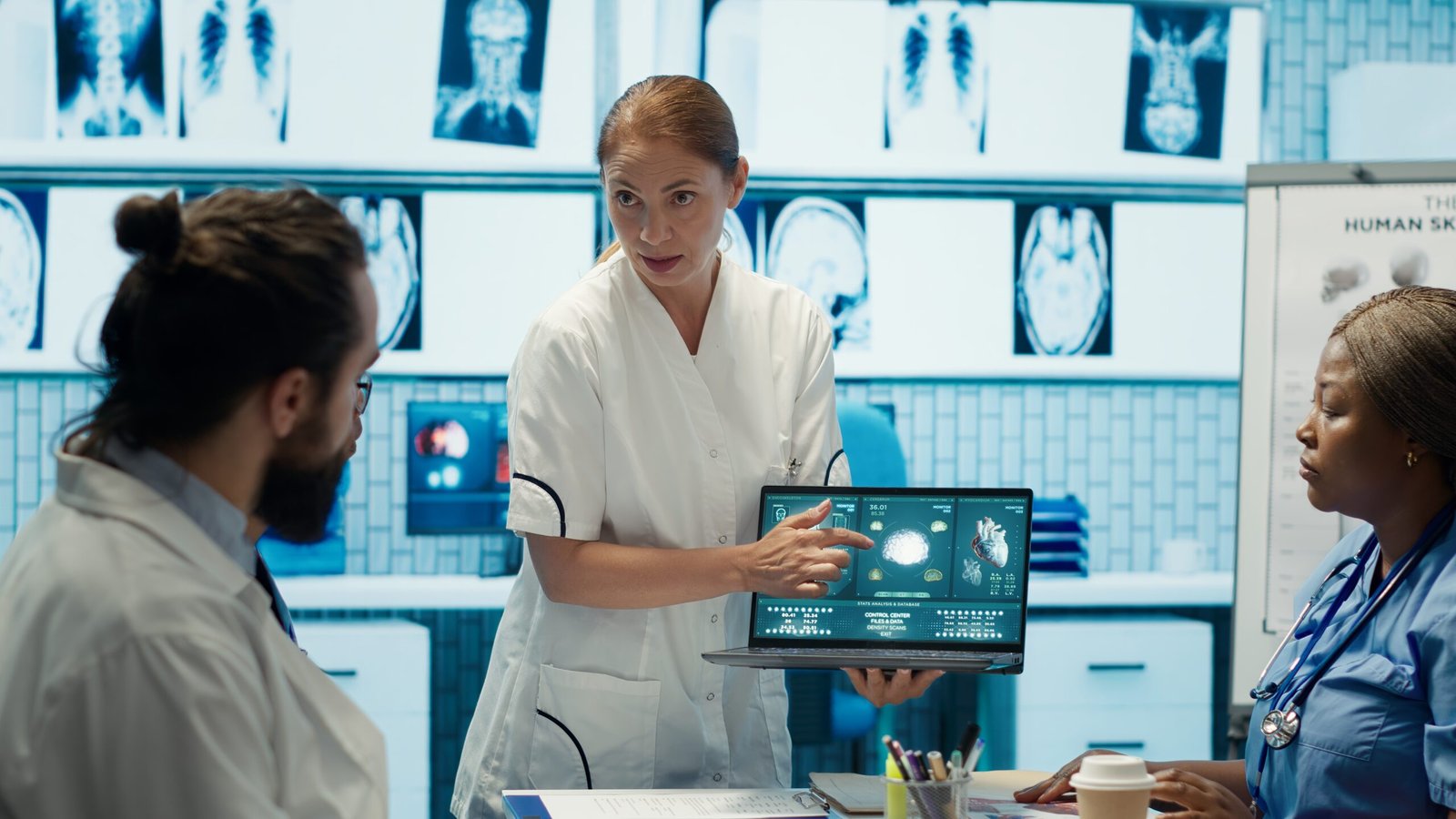
AI in medical diagnosis improves accuracy by analyzing large volumes of medical data, detecting subtle patterns in imaging and lab results, and reducing false negatives and false positives. It supports doctors as a second reader, standardizes interpretation, and helps identify early-stage disease that may otherwise be missed
A medical diagnosis decides everything that follows — treatment, cost, urgency, and sometimes survival. Yet even in advanced healthcare systems, an estimated 10–15% of outpatient diagnoses are delayed or incorrect. That raises a basic but uncomfortable question: if medicine has modern scans, digital records, and trained specialists, why do so many diagnostic mistakes still happen?
The answer is simpler than it sounds. Doctors today deal with enormous amounts of information. A single scan can contain thousands of images. Patient records stretch across years of notes, lab results, prescriptions, and specialist opinions. Decisions often have to be made quickly. Even highly skilled clinicians can miss subtle details when data becomes overwhelming. Human judgment is powerful, but it has limits.
This is where AI in medical diagnosis starts to matter. AI systems can scan large volumes of medical data, highlight patterns, and flag abnormalities that might otherwise be overlooked. They do not replace doctors. Instead, they act like a second set of eyes — one that does not get tired and does not overlook faint signals.
But can AI actually reduce diagnostic errors? Does it make doctors more accurate? How is it used inside hospitals today? And what are the risks if it is implemented poorly?
To understand how doctors can use artificial intelligence in medical diagnosis to improve diagnostic accuracy, we need to look at how it works in real clinical settings, where it succeeds, where it struggles, and what it truly changes in medical decision-making.
Why Diagnostic Errors Still Happen in Modern Medicine
If medical science is more advanced than ever, why do diagnostic errors still occur so frequently?
The issue is not a lack of medical knowledge or training. It is the reality of how decisions are made in fast-moving, data-heavy clinical environments. Below are the structural reasons diagnostic accuracy still varies.
High-Pressure Clinical Environments
Most physicians work within tight appointment windows while managing growing patient volumes. In emergency settings, decisions must often be made within minutes. Simultaneously, documentation, insurance requirements, and digital charting consume significant mental bandwidth. When time is compressed, deep analytical review becomes harder, and rapid decision-making increases the risk of oversight.
Data Overload
Modern diagnostics generate an overwhelming amount of information. A single CT scan can contain hundreds or thousands of image slices. Lab panels track dozens of biomarkers over time. Wearables and monitoring devices add continuous physiological data. The problem is no longer insufficient information — it is filtering what truly matters without missing weak but important signals.
Fragmented Health Records
Patient information is often distributed across multiple hospitals, specialists, and software systems. Past imaging may sit in one archive, lab history in another, and consultation notes in yet another interface. Clinicians must manually reconstruct the patient story. When data is fragmented, context can be lost, and incomplete pictures lead to incomplete conclusions.
Limits of Human Pattern Recognition
Clinical reasoning heavily depends on pattern matching. Doctors compare current symptoms to cases they have previously seen. This works effectively for common and textbook presentations. It becomes unreliable when diseases present atypically, when multiple conditions overlap, or when early-stage abnormalities do not match familiar patterns.
Subtle and Early Disease Signals
Many serious conditions begin with faint changes — a barely visible shadow in imaging, a slight but consistent lab trend shift, a minor irregularity in cardiac rhythm. These early signs are often small enough to escape attention during rapid review, especially when surrounded by normal findings.
Cognitive Bias
Human decision-making is not purely objective. Anchoring bias can cause clinicians to fixate on their initial impression. Confirmation bias may lead them to unconsciously favor information that supports that impression while discounting conflicting data. Availability bias can make recent or memorable cases influence interpretation disproportionately.
Fatigue and Burnout
Long shifts, night duties, and chronic workload stress reduce sustained attention. Fatigue affects visual perception, reaction time, and cognitive flexibility. Even experienced specialists demonstrate performance variability under exhaustion.
Inter-Clinician Variability
Two qualified physicians can interpret the same imaging study or clinical dataset differently. This does not imply incompetence. It reflects the inherent variability of human judgment. Experience level, subspecialty training, and recent exposure to similar cases all influence interpretation.
Together, these factors explain why diagnostic errors persist despite medical advancement. The bottleneck is not medical knowledge. It is consistency under complexity. This is precisely the gap artificial intelligence is designed to address.
How AI in Medical Diagnosis: Key Benefits
Artificial intelligence does not improve diagnosis by replacing doctors. It improves diagnosis by reducing variability, highlighting risk, and strengthening pattern detection across large datasets. In practical terms, measurable improvements in diagnostic accuracy typically occur in five areas:
- Reduction in false negatives
- Reduction in false positives
- Improved sensitivity and specificity
- Standardization across clinicians and
- AI functioning as a second reader
Reduction in False Negatives
A false negative occurs when a disease is present but missed. In conditions such as early-stage cancer or stroke, even a small overlooked abnormality can delay critical intervention. AI systems trained on large clinical datasets can identify subtle imaging changes or statistical patterns that may be difficult to detect during rapid human review. By flagging these weak signals, AI lowers the probability of missed diagnoses.
Reduction in False Positives
False positives trigger unnecessary follow-up tests, procedures, and patient anxiety. AI improves specificity by helping distinguish clinically meaningful findings from benign variations. Instead of labeling every abnormality as equally suspicious, AI assigns probability-based risk scores that guide more precise decision-making.
Improved Sensitivity and Specificity
Diagnostic performance is commonly measured using sensitivity (correctly identifying disease) and specificity (correctly ruling it out). AI-assisted workflows have demonstrated improvements in both metrics across several imaging-based specialties. These gains are most consistent when AI supports, rather than replaces, physician review.
Standardization Across Clinicians
Human interpretation naturally varies due to experience, workload, and fatigue. AI systems apply the same evaluation criteria to every case, generating consistent outputs regardless of external conditions. This reduces variability between clinicians and supports more uniform diagnostic standards across institutions.
AI as a Second Reader
In many hospitals, AI assisted diagnosis functions as a second set of eyes. The physician completes the primary assessment, and the AI system independently analyzes the same data. If it identifies a discrepancy or highlights a suspicious area, the clinician reassesses before finalizing the diagnosis. Evidence increasingly shows that combined performance — physician plus AI — outperforms either working alone.
Real-World Clinical Applications
AI is already active in several diagnostic domains:
- Mammography models developed by Google Health have demonstrated improved breast cancer detection performance.
- Stroke triage systems from Aidoc assist emergency departments in prioritizing critical scans.
- Autonomous diabetic retinopathy screening systems from IDx Technologies enable primary care-based eye disease detection without an on-site specialist.
Across these implementations, the pattern is consistent: AI enhances diagnostic accuracy by supporting detection, quantifying risk, and reducing variability — while the final clinical decision remains with the physician.
How Doctors Integrate AI in Medical Diagnosis Workflows
Improving accuracy is not just about model performance. Many of these systems function as practical AI tools for doctors, embedded directly into daily clinical workflows. If integration is clumsy, doctors ignore it. If it fits naturally into existing systems, it strengthens decision-making without slowing care.
In practice, AI is integrated in several structured ways: embedded within imaging systems, connected to electronic health records, used as triage support, and monitored through governance frameworks.
AI Embedded in Radiology PACS Systems
In radiology departments, AI tools are often integrated directly into PACS (Picture Archiving and Communication Systems). When a scan is opened, the AI system has already analyzed the images in the background. Suspicious regions may be highlighted using overlays, bounding boxes, or heatmaps. The radiologist reviews the scan as usual but with AI-generated cues available for reference.
AI-Generated Probability Scores
Instead of delivering binary answers, most clinical AI systems generate probability-based risk scores. For example, a scan may be labeled with a likelihood percentage for malignancy or hemorrhage. This supports decision-making rather than replacing it. The physician interprets the score in clinical context before finalizing the report.
Triage and Case Prioritization
In emergency settings, AI systems can flag high-risk scans for immediate review. For instance, suspected stroke or intracranial bleeding cases may be pushed to the top of the radiology queue. This reduces time-to-diagnosis in time-sensitive conditions without altering the physician’s authority.
Integration Into EHR Dashboards
Beyond imaging, AI risk scores can be embedded directly inside electronic health record dashboards. Predictive models may flag patients at high risk of deterioration, sepsis, or cardiac events. These alerts function as decision-support tools rather than automated diagnoses.
Physician Override and Final Authority
In all responsible implementations, the physician retains final decision-making authority. AI outputs can be accepted, ignored, or overridden. This safeguard ensures accountability remains with the clinician and prevents blind reliance on algorithmic outputs.
Clinical Governance and Monitoring
Hospitals deploying AI systems typically establish review committees to monitor performance. Models are evaluated for accuracy, bias, and drift over time. Post-deployment monitoring ensures the system continues to perform reliably across changing patient populations.
Institutions such as Mayo Clinic and Cleveland Clinic have incorporated AI tools within imaging and triage workflows under structured governance models. The pattern is consistent: successful AI adoption depends less on algorithm complexity and more on workflow alignment and oversight.
The technology improves accuracy only when it fits naturally into how doctors already work.
Core AI Technologies Powering Diagnostic Accuracy
AI improves diagnosis because it can process different types of medical data at scale — structured numbers, complex images, and unstructured text — using specialized computational models. Each technology category addresses a specific limitation of human analysis.
Machine Learning: Structured Risk Prediction
Machine learning models are most effective when working with structured data such as lab values, vital signs, age, medical history, and comorbidities.
Techniques like logistic regression and random forests analyze relationships between variables and calculate risk probabilities. For example, they can estimate the likelihood of heart failure, sepsis, or hospital readmission based on patterns across thousands of prior cases.
Clinically, this matters because humans struggle to intuitively weigh dozens of variables simultaneously. Machine learning systems quantify risk mathematically rather than relying on cognitive approximation.
Deep Learning: Pattern Detection in Complex Data
Deep learning models, particularly Convolutional Neural Networks (CNNs), are designed to interpret high-dimensional data such as medical images.
A CT scan may contain hundreds of slices. A mammogram contains subtle pixel-level variations. Deep learning systems analyze millions of pixel relationships simultaneously and detect micro-patterns that are difficult for the human eye to consistently recognize.
This capability explains why deep learning performs strongly in radiology, pathology, and ophthalmology — domains where visual precision determines diagnostic accuracy.
Computer Vision: Precision in Imaging Interpretation
Computer vision is the applied layer of deep learning in imaging workflows.
It enables:
- Lesion segmentation (outlining suspicious areas)
- Tumor boundary detection
- Microcalcification detection
- Image noise reduction for clearer interpretation
Instead of passively reviewing scans, clinicians receive structured visual guidance that reduces oversight risk. The technology does not replace interpretation; it enhances visual scrutiny.
Natural Language Processing: Unlocking Clinical Text
A large percentage of medical data exists in free-text form — progress notes, discharge summaries, referral letters.
Natural Language Processing (NLP) allows AI systems to extract meaningful information from these unstructured records. It can identify symptom patterns, medication histories, and warning phrases buried in documentation.
Without NLP, valuable clinical insight remains trapped in narrative text. With it, AI systems can incorporate written reasoning into diagnostic analysis.
Regulatory Safeguards
Because diagnostic AI directly affects patient care, many tools require clearance from the U.S. Food and Drug Administration before deployment. These systems undergo validation studies, performance benchmarking, and post-market monitoring.
Technology alone does not improve diagnosis. Validated, regulated technology embedded responsibly into clinical workflows does.
| Technology | What It Works On | What It Actually Does | Why It Matters in Diagnosis |
|---|---|---|---|
| Machine Learning | Structured data (lab values, vitals, demographics, medical history) | Calculates risk probabilities using statistical models like logistic regression and random forests | Helps quantify disease risk when multiple variables interact beyond intuitive human calculation |
| Deep Learning | Complex data (CT scans, MRIs, mammograms, pathology slides) | Detects subtle pixel-level patterns using neural networks such as CNNs | Improves detection of early-stage or faint abnormalities in imaging-heavy specialties |
| Computer Vision | Medical images | Highlights lesions, outlines tumor boundaries, reduces image noise | Acts as visual decision support, reducing oversight in scan interpretation |
| Natural Language Processing (NLP) | Unstructured clinical text (doctor notes, discharge summaries) | Extracts symptoms, diagnoses, and risk indicators from narrative documentation | Unlocks valuable clinical insights hidden in written records |
| Regulated Clinical AI Systems | Validated medical software tools | Undergo regulatory clearance and performance monitoring | Ensures safety, reliability, and accountability in real-world patient care |
Implementation Challenges in AI-Driven Medical Diagnosis
AI systems can demonstrate impressive gains in diagnostic accuracy under controlled research conditions, but real-world healthcare environments are far more complex. Hospitals operate within layered technical systems, regulatory frameworks, and human workflows that do not automatically adapt to new tools. If implementation is rushed or poorly structured, AI does not strengthen diagnosis; it introduces new forms of risk. The real challenge is not building the model. It is sustaining performance in live clinical settings.
The barriers to responsible deployment typically fall into four interconnected areas.
Data Quality, Bias, and Generalization
AI models learn from historical clinical data. If that data lacks diversity across age groups, ethnic backgrounds, comorbidities, or disease variations, the resulting system will inherit those gaps. A model trained predominantly on one demographic may underperform when applied to another.
Beyond bias, there is the issue of generalization. Hospitals differ in imaging equipment, scanning protocols, and documentation standards. A model trained in one institution may not automatically maintain its accuracy in another without recalibration. Academic datasets are often curated and clean, while real hospital data is noisy, incomplete, and inconsistent. The difference between controlled training environments and everyday clinical reality can significantly affect performance.
AI, therefore, must be continuously validated across settings rather than assumed to be universally reliable.
Workflow Integration and Clinical Adoption
Even highly accurate AI systems fail if they disrupt clinical workflows. Physicians operate within established systems such as PACS platforms for imaging and electronic health records for patient management. If AI outputs are difficult to interpret, generate excessive alerts, or require additional steps that slow down care, adoption drops rapidly.
Effective integration means that AI insights appear seamlessly within existing interfaces, provide meaningful probability scores rather than vague alerts, and allow physicians to retain full authority over decisions. The technology must support judgment, not compete with it. Adoption depends as much on usability and trust as it does on raw accuracy.
Regulation, Privacy, and Legal Accountability
Diagnostic AI tools are not consumer apps; they influence medical decisions. As a result, many systems require regulatory review and clearance, including oversight from bodies such as the U.S. Food and Drug Administration. These approval pathways involve performance validation, risk classification, and post-market monitoring.
At the same time, healthcare data is governed by strict privacy regulations. Training, updating, and sharing AI systems must comply with frameworks such as HIPAA or GDPR. Legal accountability adds another layer of complexity. If an AI system contributes to a diagnostic error, responsibility must be clearly defined between clinician, institution, and software provider. Without regulatory clarity and legal safeguards, institutional adoption remains cautious.
Ongoing Monitoring and Model Drift
Medicine does not stand still. Disease prevalence shifts, imaging technology improves, and patient populations evolve. Over time, an AI model trained on historical data may begin to lose accuracy if it is not continuously evaluated and updated. This phenomenon, known as model drift, can quietly erode diagnostic performance.
Responsible deployment requires structured monitoring, recalibration, and periodic validation. AI in healthcare is not a static installation; it is a system that demands maintenance, oversight, and accountability.
| Challenge Area | Why It Matters | Risk if Ignored |
|---|---|---|
| Data Quality & Bias | Ensures accuracy across diverse populations | Unequal diagnostic reliability |
| Cross-Institution Generalization | Maintains performance in different hospitals | Inconsistent outcomes |
| Workflow Integration | Drives real clinician adoption | Low usage despite high accuracy |
| Regulation & Legal Oversight | Protects patient safety and compliance | Legal and ethical exposure |
| Model Drift | Preserves long-term reliability | Gradual decline in accuracy |
Key Diagnostic Areas Where AI Is Applied Today
AI adoption in diagnosis has not progressed evenly across medicine. It has advanced fastest in specialties where data is standardized, digitized, and high in volume. These conditions make algorithmic learning reliable and scalable. Below are the primary clinical domains where AI is already improving diagnostic accuracy in real-world practice.
Radiology
Radiology remains the most mature area for AI in diagnostic imaging. Medical imaging produces structured digital files, consistent labeling systems, and large training datasets — ideal conditions for deep learning models.
AI systems are currently used for lung cancer detection in CT scans, breast cancer screening in mammography, stroke and intracranial hemorrhage identification in emergency imaging, fracture detection in X-rays, and pneumonia detection in chest imaging. In many institutions, these systems function as triage tools and second readers, helping prioritize urgent cases and reduce missed abnormalities. Radiology advanced first because imaging data is standardized and interpretation is heavily pattern-based.
Pathology
Pathology is rapidly integrating AI as digital slide scanning becomes more common. Whole-slide imaging allows tissue samples to be analyzed computationally.
AI assists with tumor grading, detection of lymph node metastasis, prostate cancer biopsy evaluation, and quantitative cellular pattern analysis. Much like radiology, pathology involves repetitive high-precision visual assessment, which aligns well with deep learning capabilities. As digitization expands, adoption continues to grow.
Cardiology
Cardiology combines waveform data, structured vitals, imaging, and longitudinal patient records. AI systems in this domain are used for ECG arrhythmia detection, heart failure risk prediction, and early identification of cardiac abnormalities.
Unlike radiology, cardiology often relies on combining multiple data types rather than analyzing a single image. AI models in this field frequently integrate lab values, imaging findings, and historical trends to improve risk stratification.
Ophthalmology
Ophthalmology has seen strong AI adoption due to the clarity and consistency of retinal imaging. Conditions such as diabetic retinopathy and age-related macular degeneration have well-defined visual markers.
AI systems are now capable of autonomous screening for diabetic retinopathy in primary care settings, enabling earlier detection without requiring a specialist at every screening site. This has expanded access in both urban and rural healthcare environments.
Oncology and Precision Diagnostics
Beyond imaging-heavy specialties, oncology is increasingly incorporating AI-driven analytics. Companies such as Tempus are integrating imaging, genomic data, and clinical records to refine cancer diagnosis and treatment selection.
These systems aim to move beyond image interpretation alone and toward multi-data precision diagnostics.
Across all these domains, one pattern is clear: AI adoption progresses fastest where data is digitized, structured, and abundant. Imaging-led specialties were first not because they are more important, but because their data ecosystems were ready for algorithmic analysis.
Why Other Diagnostic Areas Have Been Slower to Adopt AI
If AI performs well in radiology and pathology, why has adoption been slower in other specialties? The answer is structural complexity of those areas.
Lack of Structured, High-Volume Data
Imaging specialties benefit from standardized digital formats and large labeled datasets. Many other fields, such as internal medicine or rheumatology, rely heavily on subjective symptoms, physical examination findings, and narrative documentation. Without structured and consistent data, training reliable AI systems becomes significantly harder.
Rare and Complex Diseases
Some specialties deal primarily with rare conditions that do not generate enough cases to train high-performing models. AI systems require large volumes of representative data. In low-incidence diseases, assembling sufficient training data is difficult, limiting accuracy and scalability.
Multi-System and Overlapping Disorders
Conditions that span multiple organ systems — such as autoimmune diseases or metabolic disorders — involve complex interactions rather than isolated findings. These diagnoses often depend on contextual reasoning across labs, history, and physical examination rather than a single identifiable pattern. Modeling this complexity remains technically challenging.
Ethical Sensitivity in Certain Fields
Specialties such as psychiatry involve diagnoses that are less dependent on objective biomarkers and more reliant on behavioral assessment and subjective reporting. Introducing AI into such domains raises ethical concerns related to bias, autonomy, and over-reliance on algorithmic outputs.
Lower Digital Maturity
Not all medical fields have reached the same level of digitization. In some areas, structured electronic data is incomplete or inconsistent. Without reliable digital infrastructure, AI deployment becomes impractical.
Economic and ROI Considerations
Hospitals invest in AI where measurable return on investment is clear — often in high-volume imaging departments where efficiency gains are immediate. In smaller or niche specialties, financial incentives for adoption may be weaker, slowing deployment.
Across these slower-moving areas, the limitation is not potential. It is data structure, complexity, infrastructure readiness, and economic feasibility. Imaging advanced first because it met the technical conditions required for AI training and validation.
The Future of AI in Medical Diagnosis
AI in diagnosis is still in its early phase. Most current systems focus on single tasks — detecting a tumor on a scan, flagging an arrhythmia on an ECG, or identifying diabetic retinopathy in retinal images. The next phase of AI healthcare diagnosis will move beyond isolated detection toward integrated clinical reasoning.
The future of diagnostic AI is not about replacing specialists. It is about building systems that combine multiple data streams, support real-time decisions, and reduce global disparities in care.
Multimodal AI Models
Future systems will combine imaging, laboratory data, genomics, wearable device inputs, and clinical notes into unified models. Instead of analyzing a CT scan in isolation, AI will interpret imaging alongside blood markers, prior history, and genetic risk factors. This shift toward multimodal learning allows more context-aware diagnosis rather than pattern recognition in a single data type.
Federated Learning Across Institutions
Data privacy laws limit centralized data sharing. Federated learning allows AI models to train across multiple hospitals without transferring raw patient data. Each institution trains the model locally, and updates are aggregated centrally. This approach improves diversity in training data while maintaining compliance with privacy regulations.
Real-Time Clinical Decision Support
AI systems will increasingly operate in real time within electronic health record platforms. Instead of retrospective analysis, AI will flag deterioration risk, suggest differential diagnoses, and highlight critical lab trends during active patient encounters. The goal is to assist physicians at the moment decisions are made.
AI Co-Pilots Within EHR Systems
Rather than standalone tools, AI will become embedded directly into clinical interfaces. These systems may summarize patient history, detect inconsistencies, or suggest relevant diagnostic pathways based on evolving data. The emphasis will remain on assistance, not autonomy.
Predictive and Preventive Diagnostics
As datasets expand, AI models may shift from reactive diagnosis to predictive identification of disease risk before symptoms fully emerge. Early risk detection for cardiovascular disease, metabolic disorders, or cancer could allow intervention at earlier stages.
Continuous Learning Under Regulatory Oversight
Future AI systems will require structured mechanisms for continuous monitoring, recalibration, and regulatory compliance. As models evolve, oversight frameworks will need to balance innovation with patient safety. Institutions such as the U.S. Food and Drug Administration are already adapting approval pathways to account for adaptive algorithms.
The long-term impact of AI in diagnosis will depend less on algorithm complexity and more on responsible integration, transparency, and trust. The goal is not automation of medicine. It is reduction of avoidable diagnostic error while preserving clinical judgment.
Conclusion: From Understanding AI to Using It Responsibly
AI assisted medical diagnosis is already reshaping how clinical decisions are made. It reduces variability, flags subtle abnormalities, quantifies risk, and strengthens second-review processes. But technology alone does not improve outcomes. Accuracy improves only when clinicians understand how these systems work, where they fail, and how to interpret their outputs responsibly. That is the real gap today.
Hospitals are deploying AI tools in radiology, cardiology, pathology, and screening programs. Yet many healthcare professionals were never formally trained in machine learning concepts, model limitations, data bias, or regulatory frameworks. Without foundational understanding, AI becomes either blindly trusted or completely ignored — both of which are dangerous. This is where structured training becomes critical.
The AI and Machine Learning in Healthcare program by Novelty Skills Training (NST-Dubai) is designed to bridge that gap. The program focuses on practical clinical relevance rather than abstract theory. It covers how AI models are built, how diagnostic algorithms are validated, how to interpret sensitivity and specificity in real settings, and how regulatory oversight shapes deployment. More importantly, it prepares healthcare professionals to evaluate AI tools critically instead of passively adopting them.
The future of diagnosis will not be driven by algorithms alone. It will be shaped by clinicians who understand both medicine and machine intelligence. AI will not replace doctors. But doctors who understand AI will outperform those who do not.
Frequently Asked Questions (FAQs)
1. Is AI legally allowed to make medical diagnoses on its own?
In most countries, AI systems are classified as clinical decision-support tools, not autonomous decision-makers. Even when systems are labeled “autonomous,” a licensed physician or healthcare institution remains legally responsible for the final diagnosis. Full replacement of human authority is not legally recognized in most jurisdictions.
2. How are AI diagnostic systems tested before hospital deployment?
Before clinical deployment, AI systems undergo retrospective validation studies using historical patient data. Many also require prospective trials in live clinical settings. Performance metrics such as sensitivity, specificity, AUC-ROC, and false-negative rates are benchmarked before regulatory approval.
3. Can AI reduce medico-legal liability for doctors?
Potentially, yes — but only if used properly. If AI serves as documented second-reader support and flags abnormalities that are appropriately reviewed, it can strengthen defensibility. However, blindly relying on AI outputs without clinical judgment can increase liability instead of reducing it.
4. How does AI handle rare diseases with limited training data?
Rare diseases pose a major limitation. AI models depend on large datasets, and low-incidence conditions often lack sufficient training examples. In such cases, AI may struggle with reliability and is typically used only as supportive analysis rather than primary diagnostic guidance.
5. Does AI work equally well across public and private hospitals?
Not necessarily. Performance can vary based on imaging equipment quality, digitization standards, data consistency, and IT infrastructure. Institutions with advanced digital ecosystems tend to see smoother integration and more consistent performance outcomes.
6. Is AI in medical diagnosis approved for use in the UAE?
Yes, AI-based diagnostic tools can be used in the UAE, but they must comply with regulatory oversight from authorities such as the Ministry of Health and Prevention (MOHAP) and the Dubai Health Authority (DHA). Systems must meet medical device regulations and safety standards before deployment in clinical settings.
7. Are hospitals in Dubai actively using AI for diagnosis?
Several advanced hospitals in Dubai and Abu Dhabi have incorporated AI-assisted imaging and triage systems, particularly in radiology and cardiology. Adoption is strongest in large tertiary centers and facilities aligned with national AI initiatives under the UAE’s digital health strategy.
8. Does the UAE have a national AI strategy affecting healthcare diagnostics?
Yes. The UAE National Artificial Intelligence Strategy 2031 promotes AI integration across sectors, including healthcare. The strategy encourages responsible deployment of AI technologies in clinical decision support, precision medicine, and diagnostic efficiency while maintaining regulatory safeguards.
9. How is patient data privacy protected when AI is used in UAE hospitals?
Healthcare institutions in the UAE must comply with national data protection regulations, including the UAE Personal Data Protection Law (PDPL). AI systems must ensure encrypted storage, restricted access, and compliance with medical confidentiality standards when handling patient data.
10. Will AI reduce the demand for diagnostic specialists in the future?
Current evidence suggests the opposite. AI increases efficiency but does not eliminate the need for specialists. As imaging volumes and diagnostic complexity grow, AI functions as an augmentation tool. Clinicians who understand AI systems are likely to be more valuable, not less.