
A cybersecurity analyst in the UAE monitors systems, detects threats, and responds to security incidents to protect organizations. Beginners can enter this role by building IT fundamentals, learning cybersecurity concepts, gaining hands-on experience, and starting in entry-level IT security jobs such as SOC Analyst.
Cybersecurity is growing fast in the UAE, with organizations increasing spending by up to 35% to deal with rising threats. Roles like cybersecurity analyst are in demand, but most beginners still find it difficult to break into the field.
The problem is not opportunity, but clarity. Too much information, too many paths, and no clear direction. This blog simplifies that, showing you how to become a cybersecurity analyst in the UAE, along with entry-level roles, salaries, and what the job actually involves.
- Becoming a cybersecurity analyst in the UAE follows a structured path built on fundamentals, practical exposure, and the right certifications
- Entry typically begins with roles like SOC Analyst or Junior Cybersecurity Analyst in companies such as Accenture and Emirates NBD
- Entry-level salaries range around AED 5,000 to AED 10,000 per month, with strong growth potential
- Demand is rising across sectors like banking, healthcare, government, and fintech
- The role is analytical and process-driven, requiring consistency and continuous learning
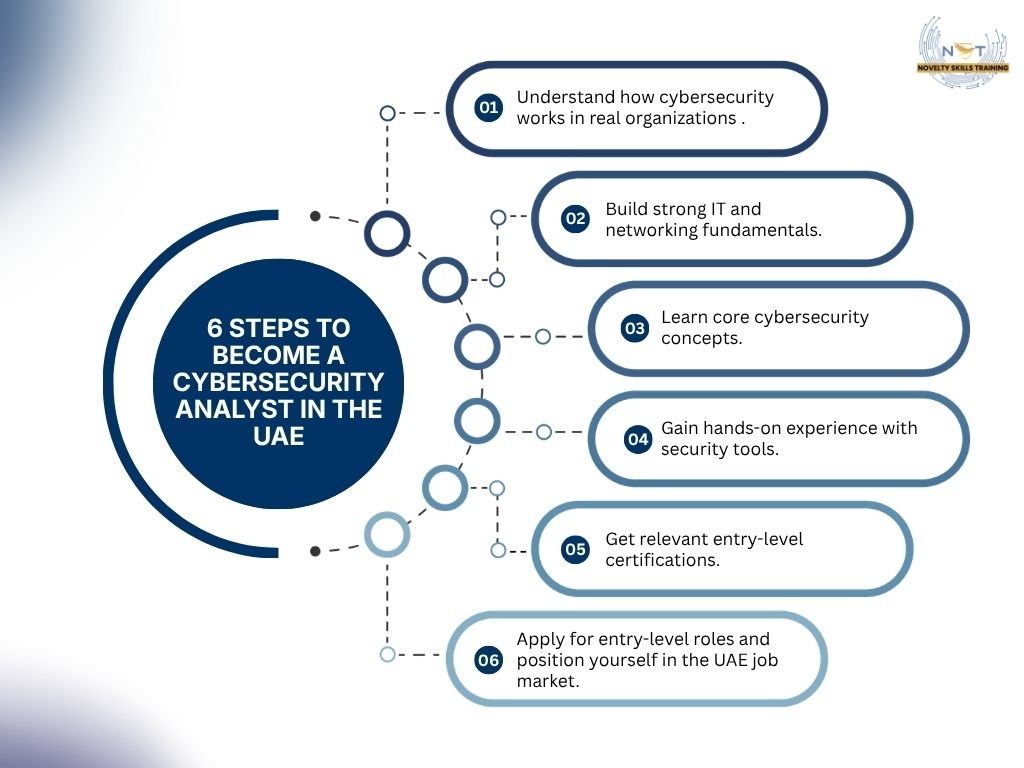
How to Become a Cybersecurity Analyst in the UAE: Step-by-Step
Before going into detail, here is the complete roadmap most entry-level cybersecurity analysts follow in the UAE job market:
- Understand how cybersecurity works in real organizations
- Build strong IT and networking fundamentals
- Learn core cybersecurity concepts
- Gain hands-on experience with security tools
- Get the right entry-level certifications
- Build industry connections and position yourself for roles in the UAE
Step 1: Understand How Cybersecurity Works in Real Organizations
Before learning tools or certifications, you need to understand how cybersecurity actually functions in real companies. It is not a single role or activity. It is a structured system of people, processes, and technologies working together to protect business operations.
In the UAE, cybersecurity setups vary depending on the organization:
- Large enterprises operate with specialized teams such as Security Operations (SOC), Incident Response, Governance, Risk and Compliance (GRC), and Cloud Security
- Entry-level cybersecurity analysts usually start in SOC environments, where they monitor alerts, analyze logs, and escalate incidents
- In many UAE organizations, cybersecurity operations are aligned with international standards such as ISO 27001, national frameworks and NIST cybersecurity framework
- Smaller companies often have compact teams where one person may handle multiple responsibilities such as monitoring, compliance, and risk assessment
- Security operations are guided by frameworks and regulatory standards that companies must follow
This step is about building context. You need to understand where you fit in the system before trying to learn individual tools or concepts. Without this clarity, most beginners struggle to connect their learning with real job roles.
Step 2: Build Strong IT and Networking Fundamentals for Cybersecurity Jobs in UAE
Cybersecurity analysts do not work in isolation. These fundamentals are also essential for areas like network security and form the base for most IT security jobs in UAE. They protect systems, networks, and applications that businesses rely on every day. Without understanding how these systems function, it becomes difficult to identify what is normal and what is suspicious.
Focus on building a strong foundation in:
- Operating systems such as Windows and Linux, including how users, permissions, and processes are managed
- Networking concepts like IP addressing, DNS, ports, protocols, and how data moves across networks
- Basic security controls such as firewalls and access restrictions
- System and network behaviour, including login patterns, data flow, and user activity
The goal is not deep technical expertise at this stage. You need clarity on how systems behave under normal conditions. Cybersecurity work is based on identifying deviations from this normal behaviour.
Step 3: Learn Core Cybersecurity Concepts
Once you understand how systems work, the next step is to understand how they are attacked and protected. This is where you start thinking like a cybersecurity analyst.
Focus on key concepts such as:
- Common threats including phishing, malware, ransomware, and unauthorized access
- Vulnerabilities, risks, and attack surfaces
- Security principles such as authentication, authorization, and data protection
- How real-world incidents happen and how organizations respond to them
This stage shifts your perspective. Instead of asking how systems work, you start asking how they can be misused, exploited, or compromised. This mindset is essential for analyzing alerts and understanding security incidents. It also helps you understand how areas like penetration testing and ethical hacking identify system weaknesses.
Step 4: Gain Hands-On Experience with Security Tools
This is one of the most important stages because most employers in the UAE prioritize practical exposure over theoretical knowledge.
Start building practical exposure through:
- Virtual labs and simulated environments where you can observe attacks and responses
- Log analysis, where you learn how to read system activity and identify unusual patterns
- Understanding how SIEM tools collect, organize, and prioritize security alerts
- Creating a simple home lab to simulate login activity, network traffic, and basic attack scenarios
- Documenting your work through small projects, case studies, or a GitHub portfolio
The goal here is not mastering tools, but building confidence in handling security data. Employers expect you to demonstrate that you can think through real scenarios, not just explain concepts.
Step 5: Get the Right Entry-Level Certifications
Certifications help structure your learning and validate your understanding, but they are not enough on their own. In the UAE job market, employers look for candidates who can apply their knowledge in practical situations.
Focus on certifications that:
- Cover core cybersecurity fundamentals, such as CompTIA Security+ or ISC2 Certified in Cybersecurity (CC)
- Provide structured learning paths suitable for beginners
- Include practical or scenario-based components
- Are recognized by employers in the UAE
Many beginners start with cybersecurity courses in UAE that align with industry certifications and include practical training. Choosing the right cybersecurity certification in UAE helps build structured knowledge, but it should always be combined with hands-on experience.
Step 6: Build Industry Connections and Position Yourself in the UAE
Breaking into cybersecurity is not only about skills. You also need to understand how the UAE job market works and how to position yourself for opportunities.
Start by:
- Optimizing your LinkedIn profile with relevant cybersecurity keywords and a clear focus on UAE roles
- Following cybersecurity professionals based in the UAE and learning from their insights
- Engaging with posts, discussions, and hiring trends in the cybersecurity space
- Attending webinars, events, or local meetups where possible
- Aligning your resume with UAE job expectations and entry-level role requirements
This step helps you move from learning to visibility. Networking is not about asking for jobs. It is about understanding the market, building awareness, and positioning yourself when opportunities arise.
What Does a Cybersecurity Analyst Actually Do?
This role is not about hacking systems or writing complex code all day. It is about observing patterns, identifying unusual behaviour, and responding to risks using defined processes and tools.
Core Responsibilities of a Cybersecurity Analyst
On a day-to-day basis, cybersecurity analysts focus on identifying, analyzing, and responding to potential security risks.
- Monitoring security alerts generated by systems and tools
- Analyzing logs to detect unusual or suspicious activity
- Investigating incidents such as unauthorized access or abnormal behaviour
- Escalating critical threats based on defined response procedures
- Documenting incidents, actions taken, and outcomes
- Supporting teams in improving security controls and reducing risks
Where Cybersecurity Analysts Work in the UAE
Cybersecurity analysts are required across industries in the UAE where data security and system reliability are critical.
Common sectors include:
- Banking and financial services, where protecting transactions and customer data is essential
- Government and public sector organizations handling sensitive information
- Healthcare institutions managing patient records and digital systems
- E-commerce and fintech companies handling payments and user data
- Large enterprises operating cloud-based infrastructure
These environments operate under strict security and compliance requirements, which directly influence how analysts perform their roles.
Role Differences in Large vs Small Organizations
The responsibilities of a cybersecurity analyst vary depending on the size and structure of the organization.
- Work is divided across specialized teams such as SOC, incident response, and compliance
- Analysts focus on monitoring alerts and handling specific types of incidents
- Clear processes, tools, and escalation paths are defined
- Roles are broader and less specialized
- Analysts may handle monitoring, risk assessment, and compliance tasks together
- Processes may be less structured but require more flexibility
Understanding this difference helps set realistic expectations about your first role.
Cybersecurity Analyst vs Ethical Hacker
Many beginners confuse these two roles, but they serve different purposes within cybersecurity.
- Focuses on monitoring, detection, and incident response
- Works with alerts, logs, and ongoing system activity
- Ensures systems remain secure during day-to-day operations
- Focuses on testing systems to identify vulnerabilities
- Simulates attacks to find weaknesses before real attackers do
- Works on proactive security assessment rather than monitoring
Is Cybersecurity Analyst a Good Career in the UAE?
Cybersecurity is a strong career option in the UAE because demand is consistent across industries like banking, healthcare, and government. There are clear entry-level roles, especially in security operations, which makes it accessible for beginners who build the right foundation. If you are comfortable working with systems, analyzing patterns, and following structured processes, this role can be a good fit.
However, this is not a shortcut career. A large part of the job involves monitoring, analysis, and continuous learning. It suits people who are patient, detail-oriented, and willing to build skills over time. If you expect quick results, highly creative work, or minimal technical involvement, this path may not align with your expectations.
Cybersecurity Skills Required in UAE (For Beginners)
These skills are directly connected to areas like network security, ethical hacking, penetration testing, and data protection in UAE organizations.
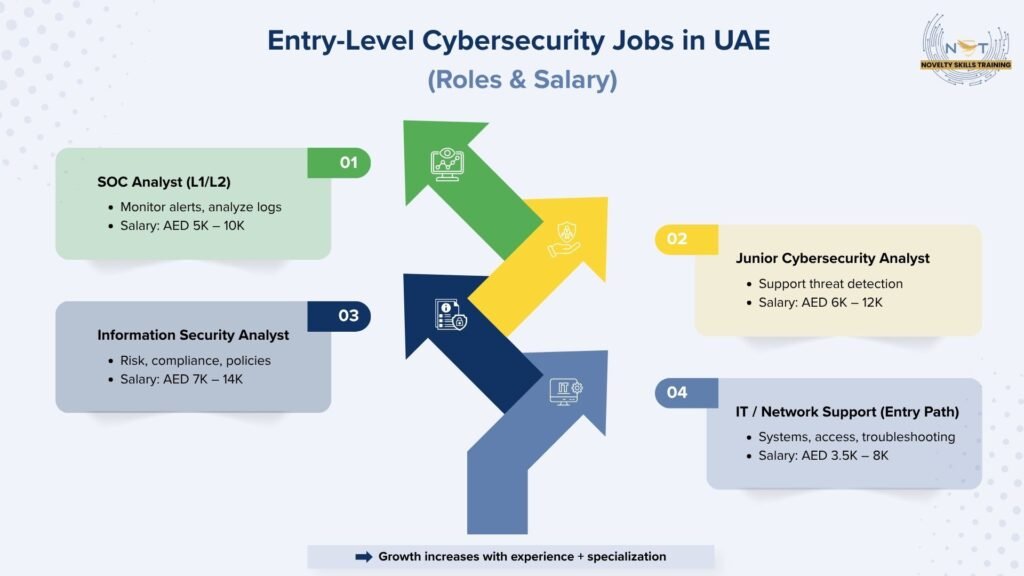
Entry-Level Cybersecurity Jobs in UAE (Salary & Roles)
Once you build the right foundation, the next step is to understand where you actually enter the field. Most beginners start with roles focused on monitoring, analysis, and supporting security operations.
These roles form the most common entry point into IT security jobs UAE for beginners entering the cybersecurity field.
| Role | What They Do | Cyber security salary UAE (Monthly) | Companies Hiring in UAE |
|---|---|---|---|
| SOC Analyst (L1/L2) | Monitor alerts, analyze logs, investigate suspicious activity, escalate incidents | AED 5,000 – AED 10,000 | Accenture, Help AG, DTS Solution, Dicetek LLC, VaporVM |
| Junior Cybersecurity Analyst | Support threat detection, assist in incident response, review system activity | AED 6,000 – AED 12,000 | Wipro, Accenture, Marsh & McLennan, MUFG (DIFC), L’Oréal Tech Teams |
| Information Security Analyst | Work on security policies, risk assessment, compliance, and monitoring | AED 7,000 – AED 14,000 | Emirates NBD, RAKBANK, Sukoon Insurance, Dubai Careers (Govt roles) |
| IT Support/ Network Support (Entry Path) | Manage systems, troubleshoot issues, handle user access and networks | AED 3,500 – AED 8,000 | Al Futtaim Group, NAFFCO, Alpha Data, Innovo Group |
Real Challenges of Being a Cybersecurity Analyst
Some of the most common challenges include:
- Repetitive monitoring work that requires focus even when the tasks feel routine
- Alert fatigue, where large volumes of notifications need to be reviewed carefully
- Working with uncertainty, because not every alert is a real threat and decisions often rely on limited information
- High responsibility, since even small mistakes can affect systems, data, or business operations
- Continuous learning, because threats, tools, and security practices keep changing
Now that you understand both the opportunities and the challenges, the next step is to bring everything together and make a clear decision about whether this career path is right for you.
Conclusion
The opportunity in the UAE is strong. Organizations are actively hiring, entry-level roles exist, and there is clear long-term growth. But getting there depends on how well you prepare. The focus should always be on building real understanding and hands-on capability, not just theoretical knowledge.