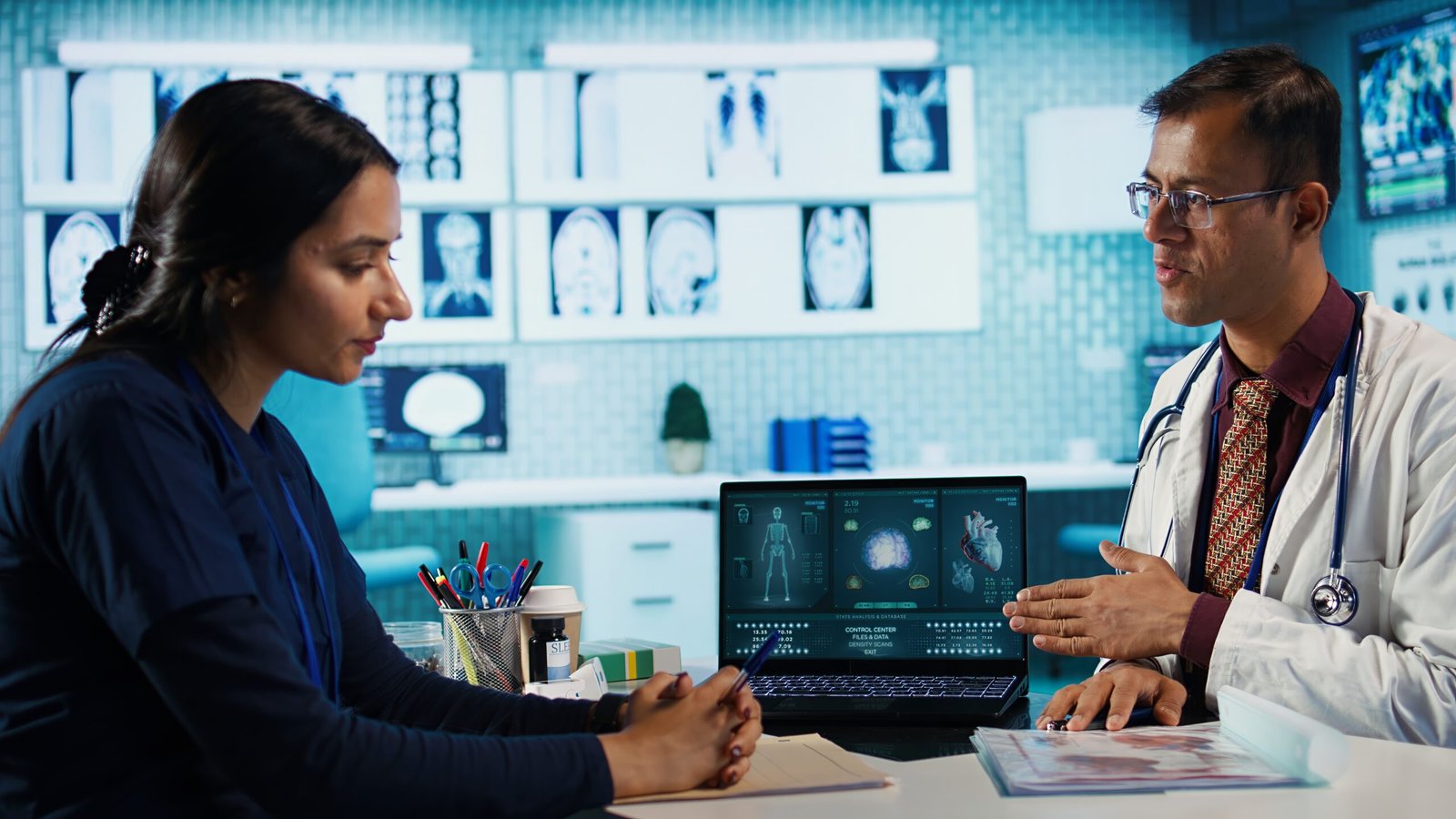
Machine learning in healthcare refers to the use of AI algorithms that analyze medical data to support clinical decision-making, diagnosis, treatment planning, and healthcare operations. By learning from large datasets such as electronic health records, medical images, and laboratory results, ML systems help healthcare professionals identify patterns, predict risks, and improve patient care outcomes.
In healthcare environments, machine learning models are trained using clinical data, patient histories, imaging scans, genomic information, and treatment outcomes. These datasets are widely used in healthcare data analytics and AI-driven clinical research. These models can detect patterns that may not be visible through manual analysis, helping clinicians make faster, more accurate, and evidence-based decisions.
In healthcare, ML is no longer an experimental add-on. It is becoming integrated into:
- Clinical decision support systems
- Medical imaging diagnostics
- Predictive risk modeling
- Personalized treatment planning
- Hospital workflow optimization
- Drug discovery pipelines
The real value of machine learning in healthcare lies in improving diagnostic accuracy, enabling earlier disease detection, optimizing hospital resources, and supporting faster data-driven clinical decisions. Professionals interested in building practical skills in healthcare AI can explore the AI and ML Healthcare Training program designed for real-world machine learning applications in healthcare and clinical research.
Machine Learning in Healthcare for Clinical Decision Support Systems
Machine learning (ML) is revolutionizing Clinical Decision Support Systems (CDSS), transforming how healthcare providers make decisions. These systems are now faster, more accurate, and tailored to individual patients, leading to better outcomes.
Key Benefits of ML in CDSS:
- Improved Diagnostics
ML analyzes medical data to detect diseases earlier and more accurately, such as cancer and neurological disorders, improving diagnosis rates.
- Personalized Treatment
ML systems analyze patient history and genetic data to recommend personalized treatment plans, increasing treatment effectiveness and reducing side effects.
- Predictive Analytics
Predicts patient risks (e.g., sepsis, readmissions) to enable early interventions and reduce complications
- Efficiency and Reduced Errors
By minimizing human error and improving consistency, ML enhances diagnostic precision and ensures no critical details are overlooked.
Machine learning is not just transforming healthcare delivery; it is also reshaping the type of professionals the healthcare industry now requires.
Benefits of Machine Learning in Healthcare
If you are from a life sciences background, this shift is not about becoming a data scientist overnight. It is about understanding how machine learning improves patient outcomes — and where your domain expertise fits into that ecosystem.
- Fewer Diagnostic Errors
By analyzing scans, lab results, and patient history with precision, ML supports doctors in making more accurate diagnoses. Better accuracy leads to safer treatments and fewer complications.
- Reduced Clinical Burnout
Automation of documentation, triage, and workflow tasks reduces administrative burden. When clinicians are less overwhelmed, they make clearer decisions — improving patient care overall.
Machine learning doesn’t replace healthcare professionals. It strengthens them — and stronger decisions lead to better patient outcomes.
Want to learn how machine learning models are used in healthcare environments?
Explore the AI and ML Healthcare Training Program to understand how predictive analytics, clinical data analysis, and AI-driven healthcare technologies are applied in real-world healthcare and clinical research settings.
Real-World Examples:
Machine learning is already being used in real-world healthcare environments. IBM Watson Health supports oncologists with personalized treatment recommendations, while Aidoc assists radiologists by detecting life-threatening conditions in imaging scans. In clinical research, an AI-based Clinical Decision Support System (CDSS) analyzed electronic health records to recommend personalized medications and predict adverse drug reactions with up to 94.5% accuracy in hybrid models. Clinicians reported a 30% reduction in cognitive workload and a 15% decrease in adverse drug reactions, highlighting tangible patient safety benefits. Although challenges such as data privacy, interoperability, and regulatory compliance remain, advancements like federated learning and explainable AI are driving responsible and scalable adoption.
Applications of Machine Learning in Healthcare-
Standard Applications
| Application | Description |
|---|---|
| Disease Diagnosis and Early Detection | ML analyzes imaging, labs, and patient history to detect diseases like cancer, heart disease, and diabetes at earlier stages. |
| Drug Discovery and Development | Machine learning identifies potential drug candidates, predicts interactions, and optimizes clinical trials to reduce cost and development time. |
| Clinical Trial Optimization | ML analyzes EHR data to match patients with trials, predict outcomes, improve recruitment, and reduce participant dropouts. |
| Personalized Medicine | ML enables treatment plans tailored to genetics, lifestyle, and medical history to support targeted therapies. |
Advanced Applications
| Application | Description |
|---|---|
| Early Disease Prediction (Real-Time) | AI monitors vital signs from wearables and ICU systems to detect early warnings for conditions such as sepsis or cardiac events. |
| AI-Assisted Radiology / Pathology | Deep learning models analyze medical scans and pathology slides to identify tumors and abnormalities with expert-level precision. |
| Precision Medicine (Genomic Modeling) | AI analyzes genomic and multi-omics data to design gene-based therapies and predict how patients will respond to specific drugs. |
| AI-Driven Drug Generation | Generative AI models design new molecular structures and identify promising drug targets to accelerate pharmaceutical research. |
| Robotic Surgery Assistance | AI supports surgical robots by guiding precise movements and predicting tissue behavior to improve surgical accuracy. |
| Remote Monitoring (Wearables) | AI-powered wearable devices continuously monitor patient health and alert doctors about potential complications in real time. |
| Automated Pharmacovigilance | AI systems analyze reports, medical records, and even social media to detect and report adverse drug reactions. |
| Federated Learning Privacy | Federated learning allows hospitals to train AI models collaboratively while keeping patient data private and stored locally. |
Real-World Examples of Machine Learning in Healthcare
Machine Learning (ML) is revolutionizing healthcare by improving outcomes, reducing costs, and enhancing service efficiency. Let’s look at some of the most impactful ML applications in healthcare that are shaping the future of patient care.
1. Medical Imaging and Diagnostics
ML models analyze medical images (X-rays, MRIs, CT scans) to assist radiologists in detecting conditions such as tumors, fractures, and more, improving diagnostic accuracy.
Example:
Aidoc: Uses ML to detect acute conditions like intracranial hemorrhages in real-time radiology images, providing immediate alerts to radiologists.
Case Study: Deep Learning for Intracranial Hemorrhage Detection
A 2025 study validated a deep learning model for detecting intracranial hemorrhage on CT scans, with strong diagnostic accuracy across multiple hemorrhage subtypes, enhancing early detection and fast clinical intervention.
2. Personalized Treatment Plans
ML models are being used to create personalized treatment plans, helping clinicians choose the most effective therapy tailored to an individual’s needs.
Example:
IBM Watson for Oncology: Analyzes clinical trial data and patient records to recommend personalized cancer treatments based on genetic markers.
Case Study: Concordance Between IBM Watson for Oncology & Clinical Decisions
A study found that Watson’s recommendations for ovarian cancer treatment had a 96% concordance with expert oncologists’ decisions, proving its value in real-world clinical settings.
3. Drug Discovery and Development
ML is speeding up drug discovery by predicting which compounds are most likely to be effective for specific diseases, reducing time and costs.
Example:
Insilico Medicine: Uses ML to design new drug molecules and predict their effectiveness, reducing drug discovery timelines from 4-6 years to just 18 months.
Case Study: AI-Driven Drug Discovery for IPF
Insilico Medicine used ML to identify biological targets and design drug molecules for Idiopathic Pulmonary Fibrosis (IPF), advancing the process from years to just 18 months. The resulting drug, INS018_055 (Rentosertib), is now in clinical trials.
4. Operational Efficiency in Healthcare Systems
ML optimizes hospital operations by analyzing data for better resource allocation, scheduling, and supply chain management, improving patient care, and reducing costs.
Example:
Cleveland Clinic: Uses ML to optimize bed management, surgical scheduling, and patient flow, reducing patient wait times and improving overall hospital efficiency.
Case Study: AI-Driven Patient Flow & Scheduling Improvements
AI-powered systems predict patient admissions and discharge timing, improving bed utilization by 29% and reducing patient wait times by 37.5% in several hospital systems.
5. Wearable Health Devices
Wearables powered by ML monitor real-time health metrics like heart rate, blood pressure, and activity levels, alerting users and providers to potential issues.
Example:
Apple Watch: Uses ML to monitor heart health and detect irregularities like atrial fibrillation, alerting both the user and healthcare providers for follow-up care.
Case Study: Amsterdam UMC Study on Atrial Fibrillation Detection
In a study with 437 stroke-risk patients, Apple Watch detected atrial fibrillation (AFib) in 21 cases, 4x more than standard care, enabling faster interventions and potentially reducing stroke risks.
As machine learning continues to reshape healthcare, professionals with both life sciences knowledge and AI skills are becoming increasingly valuable. Programs such as the Artificial Intelligence and Machine Learning Training Program help learners understand how machine learning models are applied to medical data, diagnostics, and clinical research.
AI and ML Healthcare Training Course
Build strong foundations in machine learning applications for healthcare, clinical research, and drug development. Learn how predictive models, AI-driven diagnostics, and data analytics are used to improve patient outcomes and support evidence-based clinical decisions.
VIEW COURSEDuration: 6 months
Skills you’ll build:
- Machine Learning Fundamentals
- Supervised & Unsupervised Learning
- Predictive Healthcare Modeling
- Clinical Data Analysis
- AI in Drug Discovery & Clinical Trials
- Model Validation & Performance Evaluation
- Ethical & Regulatory AI Applications in Healthcare
Other Courses
- Cyber Security Training
- Artificial Intelligence and Machine Learning Training Program
Machine Learning in Healthcare vs Traditional Healthcare Analytics
Machine learning has expanded the capabilities of traditional healthcare analytics by enabling systems to learn from large datasets and identify patterns automatically. While traditional analytics relies mainly on predefined rules and manual statistical analysis, machine learning models continuously improve their predictions as more data becomes available.
| Aspect | Traditional Healthcare Analytics | Machine Learning in Healthcare |
|---|---|---|
| Approach | Uses predefined rules and statistical models | Uses algorithms that learn patterns from data |
| Data Handling | Works with structured datasets and limited variables | Can analyze large and complex datasets including images and genomics |
| Insights | Provides descriptive insights about past events | Enables predictive and prescriptive insights |
| Adaptability | Requires manual updates and rule changes | Continuously improves as more data is processed |
| Example | Basic hospital reports and historical data analysis | Predicting disease risk or assisting medical diagnosis |
Machine learning therefore represents a major evolution in healthcare analytics, enabling more proactive, data-driven, and personalized approaches to patient care.
Challenges of Machine Learning in Healthcare
While machine learning (ML) offers transformative potential in healthcare, its integration faces several challenges:
Data Privacy & Compliance: Healthcare data is highly sensitive, and ML systems must comply with regulations such as HIPAA and GDPR to ensure secure data handling.
Bias & Fairness: Models trained on unrepresentative data can produce unequal outcomes. Diverse datasets and continuous evaluation are essential to prevent discrimination.
Data Quality & Interoperability: Inconsistent, incomplete, or non-standardized data across healthcare systems can limit model accuracy and seamless integration.
Explainability & Trust: “Black box” models reduce clinician confidence. Transparent and explainable AI is necessary for wider acceptance.
Regulatory & Liability Concerns: Approval from regulatory bodies and clear accountability frameworks are required before clinical deployment.
Cost & Organizational Resistance: Infrastructure investment and workforce training are needed, and resistance to change can slow adoption.
Ethical and Regulatory Issues of Machine Learning in Healthcare
Machine learning is transforming healthcare — but innovation without responsibility can be risky. As a future professional, understanding the ethical and regulatory side of AI in HealthCare is just as important as understanding the technology itself. Here are the essentials:
Data Privacy & Compliance
Healthcare data is highly sensitive. ML systems must comply with laws like HIPAA and GDPR to protect patient information through secure, encrypted handling.
Bias & Health Equity
AI models can inherit bias from incomplete data. Ethical ML requires diverse datasets and continuous monitoring to ensure fair treatment for all patient groups.
Transparency, Explainability, and Informed Consent
Doctors must understand why an AI in HealthCare application makes a recommendation. Explainable AI builds trust and supports safe clinical decisions.
Patients must know how their data is used — especially when it trains AI models or influences treatment decisions.
Accountability, Regulatory Approval & Oversight
If AI in HealthCare applications contributes to a clinical error, responsibility must be clearly defined. Strong governance protects both patients and professionals.
Healthcare AI tools must be approved by regulatory bodies like the FDA — and continuously monitored for safety and accuracy.
Future of Machine Learning in Healthcare
As healthcare organizations adopt AI technologies, new roles are emerging at the intersection of healthcare, data science, and technology. Programs like MTech in AI Healthcare offer hands-on projects with industry pros, prepping you for startups, revolutionizing drug discovery or hospital ops. Start building: master Python ML libraries, snag internships at firms like Microsoft or Current Health.
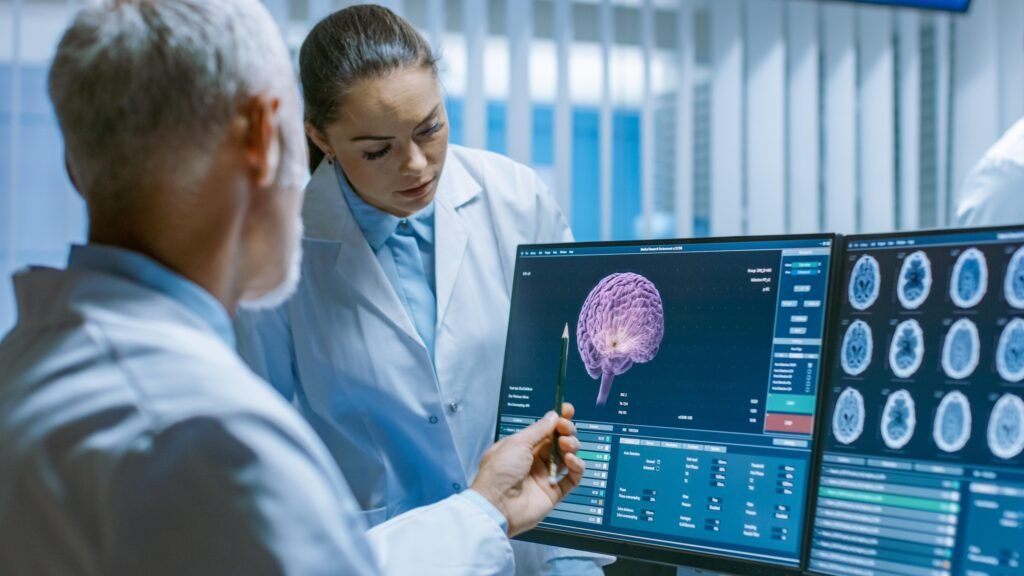
Here’s a sneak peek into what’s coming next and why it matters for your career:
| Trend | Impact for Grads | Emerging Focus Area |
|---|---|---|
| Digital Twin Patients | Simulate disease progression and test treatments virtually before real intervention | Virtual patient modeling & AI simulation engines |
| Multimodal Foundation Models | Work on AI that combines imaging, genomics, labs & clinical notes into one unified model | Large-scale healthcare AI models |
| Federated & Privacy-Preserving AI | Build hospital-grade AI systems without exposing patient data | Secure distributed AI training |
| Generative AI for Molecular Design | Design entirely new drug molecules using AI before lab synthesis | AI-driven molecular generation platforms |
These represent the next wave of healthcare AI — strategic, system-level, and innovation-heavy domains where future-ready graduates can position themselves beyond basic analytics roles.
Why It Is Exciting for Healthcare Graduates –
Machine learning is shaping the future of healthcare, and as a graduate, you have a unique opportunity to be part of it! Understanding the potential of ML means you’ll not only boost your career but also be in the heart of one of the most innovative industries in the world.
So, are you ready to dive in and make a real impact?
Take the First Step: Explore, Learn, and Innovate!
Stay ahead of the curve by diving deeper into Machine Learning in Healthcare. As this field grows, your role in it will shape the future of medicine, patient care, and even healthcare policies.
CONCLUSION
The Future of Machine Learning in Healthcare: A Gamechanger for Graduates!
Machine learning is rapidly transforming healthcare by enabling earlier diagnosis, personalized treatments, and more efficient clinical workflows. As healthcare systems increasingly rely on data-driven insights, professionals who understand both life sciences and AI technologies will play a critical role in shaping the future of medicine.
Understanding ML opens the door to career opportunities in one of the most innovative industries. Learners who want to explore training opportunities and industry-focused programs like the AI and ML healthcare training course can visit the Novelty Skills Training website to learn more about emerging healthcare and technology courses. Dive in, learn, and make an impact! This concise conclusion captures the excitement of the field while inspiring students and graduates to explore Machine Learning in Healthcare.
Frequently Asked Questions (FAQs)
1. How is Machine Learning changing the future of healthcare?
Machine Learning (ML) is revolutionizing healthcare by enabling faster diagnoses, personalized treatments, and predictive healthcare. It’s making medicine smarter, more efficient, and more patient-centered, creating exciting career opportunities for graduates like you!
2. Why is machine learning knowledge important for healthcare graduates?
Understanding ML opens cutting-edge career paths in one of the fastest-growing industries. Whether you’re interested in data science, healthcare technology, or improving patient care, ML allows you to make a real impact in transforming healthcare.
3. Can Machine Learning really help doctors diagnose diseases earlier?
Absolutely! ML algorithms are already helping doctors detect diseases like cancer and heart conditions earlier, often before symptoms show up. Early detection means better survival rates and more effective treatments, making ML a gamechanger in healthcare.
4. How does ML help personalize treatment plans for patients?
Forget the one-size-fits-all approach! ML analyzes individual patient data to create tailored treatment plans, ensuring that treatments are more effective and cause fewer side effects. It’s about making medicine more personal for every patient.
5. What is the role of Machine Learning in speeding up drug discovery?
ML is transforming drug discovery by analyzing massive amounts of data to identify promising molecules much faster than traditional methods. This helps bring life-saving treatments to market in months instead of years, improving the pace at which we fight diseases.
6. How can I get involved in Machine Learning for Healthcare after graduation?
With your background, you can explore roles in healthcare data science, AI development, or even research to design smarter diagnostic tools or optimize healthcare systems. Start by learning the basics of ML and exploring healthcare-specific applications — the opportunities are limitless!
7. What types of healthcare data are used to train machine learning models?
Machine learning models in healthcare are trained using diverse datasets such as electronic health records (EHRs), medical imaging data, genomic information, laboratory test results, wearable device data, and clinical trial datasets. These datasets help algorithms identify patterns and improve diagnostic and treatment decisions.
8. Which healthcare sectors are adopting machine learning the fastest?
Machine learning is rapidly adopted in sectors such as medical imaging diagnostics, drug discovery, genomics research, hospital operations management, and digital health platforms. These areas generate large volumes of data, making them ideal environments for AI-driven analysis and decision support.
9. What technical skills are useful for working with machine learning in healthcare?
Professionals working with machine learning in healthcare typically benefit from skills in programming languages such as Python, data analysis, statistics, machine learning algorithms, and healthcare data management. Knowledge of medical data standards and healthcare workflows is also valuable.
10. How does machine learning support preventive healthcare?
Machine learning helps identify risk patterns in patient data, enabling healthcare providers to predict diseases before symptoms appear. By analyzing medical history, lifestyle data, and clinical indicators, ML systems can support early intervention strategies that improve long-term patient outcomes.